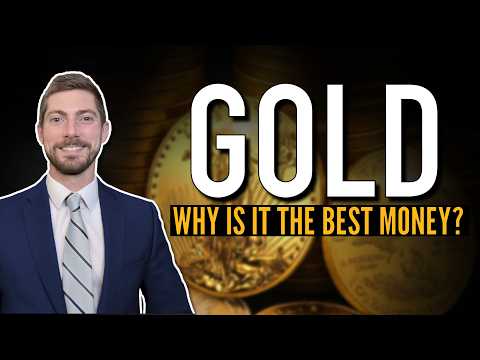
This blog post explores the reasons why gold is regarded as the best form of money, challenging the common belief in its intrinsic value. It discusses the historical context of money, the importance of scarcity, and how gold has maintained its status over time compared to other forms of currency.
In discussions about money, one question often arises: Why is gold considered the best form of money? If you find yourself unable to explain this to friends, family, or colleagues, this article will provide you with a comprehensive understanding of the topic.
A common answer to the question of why gold is money revolves around the concept of intrinsic value. Many experts assert that gold possesses intrinsic value, which is a significant reason for its status as money. However, this article aims to challenge that claim. While intrinsic value has historically been associated with money, it is not the sole reason for gold's enduring status.
The idea of intrinsic value in money can be traced back to philosophers like Aristotle, who stated that money must possess value in itself, be easily transportable, and not perish easily. Similarly, economist Murray Rothbard emphasized that money must have pre-existing value for uses beyond mere exchange. Carl Menger, the founder of the Austrian school of economics, also highlighted the importance of intrinsic value in the origins of money.
While these thinkers contributed to the understanding of money, it is essential to recognize that not all forms of money throughout history had intrinsic value. For instance, modern forms of money, such as fiat currencies and digital currencies, lack intrinsic value yet function effectively as money.
To understand why gold is the best money, we must first explore what money fundamentally represents. Money serves as a means to store surplus time and energy, allowing individuals to trade their excess resources rather than spending all their time on basic survival needs.
The primary problem that money addresses is the need to store value for future use. This leads us to ask not why gold became money originally, but rather why it has remained money over time. To answer this, we can examine other forms of money and analyze why they ceased to function as such.
Wampum, made from clam shells, served as money among various Native American tribes for centuries. However, when John Campbell introduced a hydraulic drilling machine to mass-produce wampum, the supply increased dramatically. This inflation caused the value of individual pieces of wampum to plummet, leading to its eventual decline as money.
Similarly, the islanders of Yap used large limestone rocks as money for hundreds of years. However, when Europeans arrived with superior technology, they could quarry these stones much faster, leading to an oversupply and a subsequent loss of value for the stones.
Today, we find ourselves in a similar situation. Just as the islanders and Native Americans faced inflation due to increased supply, modern economies experience inflation driven by entities like the Federal Reserve, which can print money at will. This creates an unfair advantage and diminishes the value of currency.
Gold stands out as the best form of money because it has remained difficult to acquire relative to other commodities. Unlike feathers, wampum, or even fiat currencies, the supply of gold cannot be easily increased. The only way to create gold would be through alchemy, a pursuit that has proven impossible throughout history.
In conclusion, gold is considered the best money not because of its intrinsic value, but due to its enduring scarcity and the challenges associated with increasing its supply. For thousands of years, gold has maintained its status as a reliable store of value, making it a prudent choice for anyone looking to protect their wealth. As we move forward in an economy where money can be printed at will, holding gold becomes increasingly important.
This exploration of gold's status as money is part of a broader discussion in the upcoming YouTube series "Hidden Secrets of Value," specifically in episode 3, which will be released in October. Stay tuned for more insights into the nature of value and money.