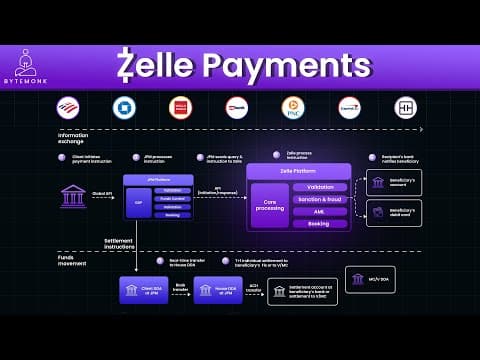
Zelle is a real-time peer-to-peer payment network that allows users to send and receive money directly between bank accounts in the U.S. without the need for separate accounts or wallets. Launched in 2017 by Early Warning Services, Zelle offers a fast, secure, and fee-free way to transfer money, making it a popular choice among users. However, it is limited to domestic transactions and requires both sender and receiver to have U.S. bank accounts.
In today's digital age, sending and receiving money has become easier than ever. One of the most popular methods for peer-to-peer payments in the United States is Zelle, a real-time payment network that allows users to transfer money directly from one bank account to another. This blog post will explore how Zelle works, its unique features, and how it compares to other payment systems.
Before Zelle, the U.S. payment landscape was dominated by cash, checks, and credit/debit card networks. Peer-to-peer transfers were limited to traditional channels such as PayPal or even mailing a check. The introduction of Venmo in 2009 marked a shift, particularly among younger users, due to its ease of use and social feed. However, Venmo required linking to an external bank account or debit card, which posed challenges for some users.
Recognizing the demand for fast and easy money transfers, major U.S. banks sought to create a competitive solution. This led to the development of Zelle in 2017 by Early Warning Services, a company owned by several major banks, including Bank of America, JP Morgan Chase, Wells Fargo, and others.
Zelle is a digital payment network designed to facilitate instant peer-to-peer transfers between bank accounts. Unlike other payment systems that require users to maintain a separate balance, Zelle operates directly within the existing banking ecosystem. Users can access Zelle through their bank's mobile app or the Zelle app itself, making the process streamlined and accessible.
To use Zelle, users must sign up through their bank's app or the Zelle app. The registration process requires only an email address or U.S. phone number, which serves as a unique identifier. Here’s a step-by-step breakdown of how a typical transaction works:
When a payment is initiated, it first goes through a global API that allows the sender's bank to communicate with Zelle. The following steps occur:
Despite the immediate appearance of the transfer, the actual settlement of funds occurs the following business day through the Automated Clearing House (ACH) system, which processes transactions in batches. This two-step approach allows Zelle to provide fast transfers while ensuring financial accuracy.
Zelle offers several benefits that make it an attractive option for users:
While Zelle has many advantages, it also has some limitations:
Zelle represents a significant advancement in the way people transfer money in the U.S. Its integration with major banks allows for fast, secure, and fee-free transactions, making it a convenient choice for users. However, potential users should be aware of its limitations and exercise caution when sending money. Overall, Zelle combines the benefits of real-time transfers with the reliability of traditional banking, making it a smart option for peer-to-peer payments.