
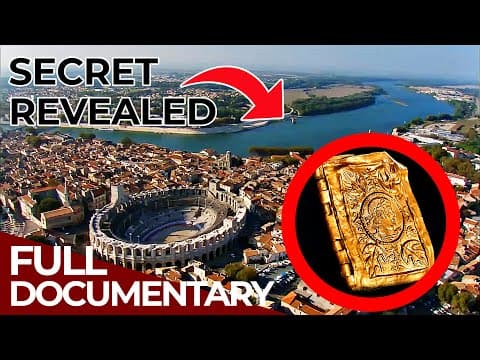
Archaeologists are uncovering the mysteries of the Al-Rone 24 shipwreck in the Rhone River, revealing a treasure trove of ancient coins and artifacts that shed light on the wealth and trade of the Roman Empire during the 4th century A.D.
The ancient city of Al, located on the banks of the Rhone River, continues to reveal its secrets as archaeologists dive into its depths. Recent investigations have uncovered a Roman shipwreck, known as the Al-Rone 24, which lies 20 meters underwater, shrouded in darkness and mystery. This blog post explores the findings from this excavation, the historical context of the shipwreck, and the implications of these discoveries for our understanding of the Roman Empire.
Archaeologists have been conducting their investigations with utmost discretion to prevent looting. Their work has led them to the 4th century A.D., a period marked by the wealth of the city of Al and its strategic importance in the Roman Empire. The Al-Rone 24 shipwreck is believed to be linked to this wealth, and the team is eager to uncover its secrets.
Led by Luke Long, the team of archaeologists prepared for a dangerous dive into the murky waters of the Rhone. Visibility was limited, and strong currents posed a significant risk. However, the team was determined to explore the site, which was marked by large stone blocks and wooden planks covered in ancient tiles. Their initial findings suggested they were dealing with a Roman shipwreck, confirmed by the discovery of a uniquely shaped anchor.
Al was a prestigious trading port during the Roman Empire, strategically located on the Rhone, which served as a gateway to the Mediterranean. The city thrived from the 1st to the 5th century A.D., becoming a hub of commerce and trade. The archaeologists' investigation into the Al-Rone 24 shipwreck raises questions about why this particular vessel sank and what it was carrying.
As the team continued their dives, they uncovered hundreds of ancient coins, including gold coins, scattered across the riverbed. This discovery prompted questions about the origins of these coins. Were they offerings, or did they come from the bustling trade that characterized Al? The coins date back to the 4th century, coinciding with the reign of Emperor Constantine II, who ruled for only three years.
The coins found at the site provide a chronological marker for the shipwreck. The presence of a gold coin from the 1st century A.D. depicting Emperor Trajan, alongside numerous coins from the 4th century, suggests a complex history of trade and commerce in Al. The city was known for its rich resources and was a vital part of the Roman economic system.
The archaeologists have developed several theories regarding the purpose of the Al-Rone 24. One theory suggests that the ship was transporting precious metals to the mint in Al, which was one of the most productive in the Empire. The discovery of metal plates and ingots further supports this theory, indicating that the ship may have been carrying materials intended for coin production.
During the 4th century, Al was not only a commercial hub but also a center of military activity. The city housed military garrisons, and the treasure found in the shipwreck may have been linked to efforts to recruit soldiers for the Roman army. The archaeologists speculate that the treasure could have been intended to fund military expeditions or support the burgeoning Christian community in the region.
The 4th century also marked a significant shift in religious dynamics within the Roman Empire. Al was home to one of the most powerful Christian communities in Gaul, and the construction of a grand cathedral during this time reflects the church's growing influence. The treasure discovered in the shipwreck may have been intended to support the construction of this landmark.
The investigation of the Al-Rone 24 shipwreck has uncovered a remarkable treasure trove, including nearly a thousand bronze coins, dozens of gold and silver coins, and unique artifacts such as a gold belt buckle. These findings not only provide insight into the wealth and trade of the Roman Empire but also raise intriguing questions about the ship's purpose and the historical context of its cargo. As archaeologists continue their work, the mysteries of the Al-Rone 24 shipwreck promise to shed light on a fascinating chapter of ancient history.



















