
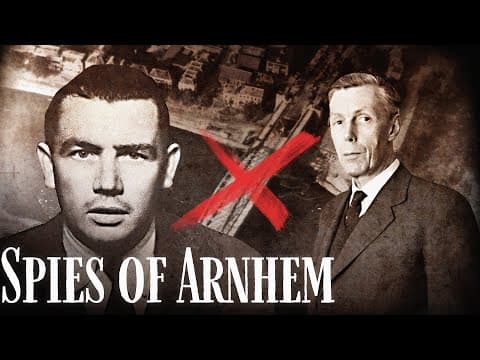
Operation Market Garden, launched in September 1944, aimed to secure key bridges in the Netherlands to expedite the end of WWII. However, it failed due to strategic miscalculations and internal betrayal, notably by Dutch double agent Christian Lindemans and possibly a high-ranking British source known as Josephine. This blog post explores the historical context, key figures involved, and the implications of their actions on the war's outcome.
Operation Market Garden, launched on September 17, 1944, was one of the most ambitious Allied operations of World War II. It was the largest airborne assault in history, with the objective of securing a series of nine bridges in the Netherlands to carve a path to Berlin, aiming to end the war by Christmas. Despite its bold vision, Market Garden ultimately failed due to a combination of strategic miscalculations and unforeseen challenges. However, it was not just military strategy that led to its failure; betrayal from within played a significant role, warning the Germans and allowing them to prepare for the invasion.
To understand the significance of Operation Market Garden, we must first consider the events leading up to it. Following the successful D-Day landings in Normandy, the Allies were poised to make significant advances into German-occupied Europe. By September 1944, the Allies had reached the Dutch-Belgian border and paused for resupply and strategic planning. General Montgomery devised Operation Market Garden, which aimed to take key bridges, outflank the Siegfried Line, and penetrate deep into Germany, ultimately neutralizing German industry and facilitating a swift victory.
The plan involved dropping 40,000 troops and glider troops onto three key bridges, with the British tasked to secure the bridge at Arnhem. The operation was expected to be completed in just two days, but it did not unfold as anticipated.
Operation Market Garden faced numerous challenges that contributed to its failure:
Two key figures emerged in the narrative of betrayal during Operation Market Garden: Christian Lindemans and the mysterious agent known as Josephine.
Christian Lindemans, a Dutch double agent known as Agent King Kong, played a crucial role in betraying Allied war plans. Initially a resistance fighter against the Germans, Lindemans became compromised after his girlfriend and brother were captured. In March 1944, he offered to work for the Germans in exchange for their release. His betrayal led to the arrest and execution of many resistance members, as he provided the Germans with critical intelligence, including details about Operation Market Garden.
Lindemans was tasked with warning Dutch resistance groups about the impending operation, but instead, he surrendered to the Germans and divulged vital information about the Allied plans, including the objective of Arnhem.
The identity of Agent Josephine remains shrouded in mystery, but she was believed to be a highly placed source within British intelligence. Operating under the direction of Carl Hines Kramer, Germany's top spy master, Josephine provided the Germans with detailed intelligence about Allied operations, including Market Garden. Her reports were taken seriously by the German High Command and contributed to their preparedness for the Allied assault.
Some historians suggest that Josephine may have been Anthony Blunt, a member of the infamous Cambridge Five spy ring. Blunt's connections and access to sensitive information could explain how the Germans received accurate intelligence about the operation just days before it commenced.
The failure of Operation Market Garden had significant implications for the war. It prolonged the conflict and resulted in the loss of thousands of Allied lives. The betrayals by Lindemans and possibly Josephine highlight the complexities of espionage during wartime and the critical role that intelligence plays in military operations.
As historians continue to unravel the layers of deception and betrayal surrounding Operation Market Garden, the stories of those involved serve as a reminder of the high stakes and moral ambiguities present in wartime espionage. The legacy of these events continues to shape our understanding of World War II and the intricate web of alliances and betrayals that defined it.



















