
This blog post explores various medieval mysteries that have been explained or theorized through modern science and research, including the dancing plague, the disappearance of the Greenland Vikings, the Shroud of Turin, and the Black Death, among others.
Throughout history, numerous events and discoveries have puzzled scholars and historians alike. In this post, we will delve into some of the most intriguing medieval mysteries that have been explored and explained through modern research and theories.
One of the most bizarre events in history is the Dancing Plague of 1518, which occurred in Strasbourg, modern-day France. Reports indicate that between 50 and 400 people danced uncontrollably for weeks, leading to exhaustion and even death.
Several theories have emerged to explain this phenomenon:
In the 9th century, Norse Icelanders settled on Greenland's southwestern coast, thriving in a harsh environment. However, by the 14th century, these Vikings mysteriously vanished while the Inuit population survived.
Several factors may have contributed to their disappearance:
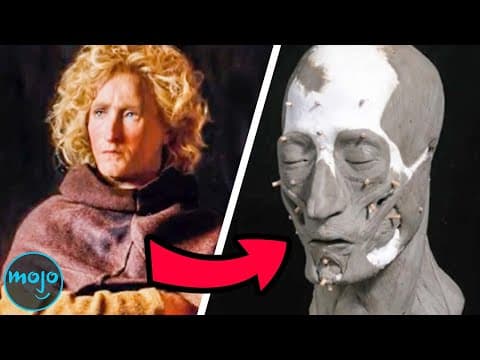
In 1936, the remarkably preserved body of a young man, known as the Bog Man, was discovered in a Swedish peat bog. This 14th-century individual was found to have been brutally murdered, with evidence suggesting he was struck three times on the head before being disposed of in the bog.
Despite modern forensic analysis revealing details about his age and social status, the reasons behind his murder and the circumstances of his death remain a mystery.
The Vinland Map, initially thought to be a 15th-century world map, raised questions about Viking knowledge of North America before Columbus. However, it was later identified as a forgery created in the 20th century.
While the map itself was proven false, excavations in the 1960s confirmed Viking presence in North America, affirming that they had indeed discovered new lands long before Columbus.
The Shroud of Turin, believed by some to be the burial cloth of Jesus Christ, has been a subject of controversy since its emergence in 14th-century France. The shroud bears a faint image of a crucified man, leading to debates about its authenticity.
In 1988, scientists used radiocarbon dating to determine that the shroud originated between 1260 and 1390 AD, suggesting it was a medieval creation rather than the burial cloth of Christ. Despite this, many still hold onto their faith regarding its authenticity.
For centuries, the location of King Richard III's remains was a mystery. After his death in the Battle of Bosworth in 1485, he was buried in Grey Friars Church, but the site was lost to history.
In 2012, archaeologists uncovered a skeleton beneath a parking lot in Leicester, England. DNA analysis confirmed the remains belonged to Richard III, solving the mystery of his burial site and providing closure to a historical enigma.
The Black Death, which devastated Europe in the 14th century, claimed millions of lives and left people searching for explanations. For centuries, the cause remained unknown, with theories ranging from planetary alignments to divine punishment.
Today, we know that the bacterium Yersinia pestis, transmitted by fleas on black rats, was responsible for the plague. This discovery has transformed our understanding of this catastrophic epidemic, which wiped out about a third of Europe's population.
These medieval mysteries, once shrouded in uncertainty, have been illuminated by modern science and research. While some questions remain unanswered, the pursuit of knowledge continues to unravel the complexities of our past. Are there any medieval mysteries you would like to see solved?



















