
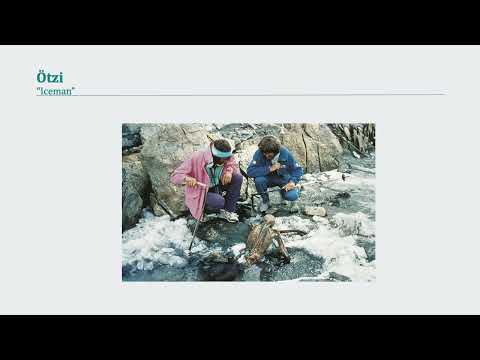
The transition from the Paleolithic to the Neolithic era marked a significant increase in violence among early human communities, as evidenced by archaeological findings like Ötzi the Iceman, whose remains reveal a life filled with conflict and survival struggles.
The evolution of human societies from the Paleolithic to the Neolithic era brought about significant changes in lifestyle, population density, and, notably, violence. While early Paleolithic humans may have had fewer concerns about violent encounters due to their low population numbers, the Neolithic period saw a rise in conflict as communities formed and populations grew.
As groups of humans transitioned from nomadic lifestyles to settled agricultural communities, the dynamics of survival changed dramatically. With the advent of farming, people began to establish roots, leading to increased competition for resources. This shift resulted in violence and sudden death becoming more common in both Europe and Africa.
Archaeological evidence supports this notion, as the earliest human remains discovered often show signs of violent trauma. In fact, remains indicating peaceful deaths are relatively rare, suggesting that conflict was a pervasive aspect of life during this time.
One of the most significant archaeological finds that illustrates this point is Ötzi, often referred to as Ötzi the Iceman. Discovered in 1991 by hikers in the Alps, Ötzi's body was found frozen in ice, leading to initial assumptions that he had died from exposure. However, further investigation revealed much more about his life and death.
At first, the hikers believed they had stumbled upon a recent victim of the mountains. However, the discovery of a copper axe nearby indicated that Ötzi lived around 3300 BC, approximately 5,300 years ago. This period marked a crucial transition from hunting and gathering to agriculture, as communities began to settle and cultivate crops.
Ötzi's belongings included a backpack, a quiver of fletched stone arrows, a dagger with a wooden handle, and a kit for starting fires. Notably, he also had tattoos on his joints and was carrying mushrooms likely used for medicinal purposes.
For over a decade, scientists believed Ötzi had died from falling into a crevasse. However, advancements in imaging and DNA technology in 2001 revealed startling new information. Ötzi had an arrowhead lodged in his shoulder at the time of death, fresh cuts on his hands, and multiple wounds on his head and chest. DNA analysis uncovered blood from four different individuals on his weapons and clothing.
These findings led to a new theory: Ötzi was likely part of a raiding party. It is believed that he encountered a local tribe during a raid, where he killed one man with an arrow, retrieved it from the corpse, and then killed another before being attacked himself. Ultimately, he succumbed to the arrow wound in his shoulder, highlighting the violent realities of Neolithic life.
Ötzi's story is not an isolated incident. Archaeological discoveries, such as the grave of a nuclear family in Germany dating back about 4,600 years, suggest that violence was a common threat. This family, buried together, likely fell victim to a raid, further emphasizing the brutal nature of life during this era.
The philosopher Thomas Hobbes famously remarked that life in the absence of strong governance is "nasty, brutish, and short." This sentiment resonates with the experiences of Ötzi, the German family, and countless others who lived in a time before organized societies and laws.
The transition from the Paleolithic to the Neolithic era was marked by significant changes in human behavior, particularly regarding violence. The evidence from Ötzi and other archaeological finds paints a picture of a world where survival often depended on conflict and competition. As communities formed and resources became scarce, the struggle for survival led to a rise in violence, shaping the lives of early humans in profound ways. Understanding this aspect of our history is crucial as we reflect on the evolution of human societies and the persistent challenges of conflict and cooperation that continue to this day.



















