
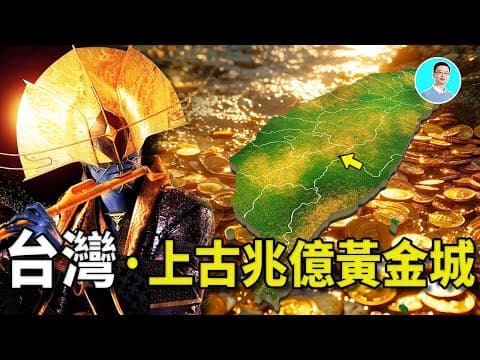
This blog post explores the intriguing theories surrounding Taiwan's ancient civilizations, including legends of advanced technology, UFO sightings, and the existence of intelligent non-human beings. It delves into historical accounts, archaeological findings, and the rich cultural heritage of Taiwan's indigenous peoples, suggesting that the island may hold untold treasures and secrets from a bygone era.
In this exploration of Taiwan's rich history, we delve into the fascinating theories surrounding its ancient civilizations. From legends of advanced technology to sightings of UFOs, Taiwan's past is shrouded in mystery. This post will uncover historical accounts, archaeological findings, and the cultural heritage of Taiwan's indigenous peoples, suggesting that the island may hold untold treasures and secrets from a bygone era.
Taiwan is often recognized for its modern technological advancements, such as TSMC’s nanochips. However, ancient records from various cultures suggest that Taiwan was once home to advanced civilizations, possibly even extraterrestrial beings. According to these accounts, flying saucers and aliens were frequently reported in ancient Taiwan, hinting at a rich and complex history.
One of the most intriguing legends is that Taiwan was part of the ancient Mu continent, an empire that supposedly sank into the Pacific Ocean. This theory is supported by the discovery of prehistoric boulders and underground caves throughout Taiwan, which may indicate that humans—or beings that were not entirely human—once inhabited the island long before the arrival of the first indigenous peoples.
In 1349, Wang Dayuan, often referred to as the Marco Polo of the East, documented his travels in a book called Dao Yi Zhi Lue. He described Taiwan, then known as Ryukyu, and recounted encounters with local chiefs who displayed fierce loyalty and brutal methods of defending their territory. His writings also mention a mysterious phenomenon where he witnessed a "midnight sun" rising in the valley, raising questions about its origins—could it have been a spaceship?
In 1632, Spanish priest Jacinto Esquivel documented his experiences in Taiwan in a report titled A Report on Matters Related to the Situation in Formosa Island. He described an expedition that encountered a massive flying object that hovered above them for 45 minutes, inspiring awe among the explorers. Such accounts from different eras suggest a consistent theme of mysterious phenomena associated with Taiwan.
According to some theories, beneath the waters east of Taiwan lies a giant underwater pyramid, remnants of an ancient high-tech civilization that may have existed during the last ice age. This civilization could have been responsible for the advanced technologies and mysterious artifacts found in Taiwan today.
Taiwan is often referred to as a "Treasure Island" due to its rich deposits of gold. Historical records indicate that two significant areas in Taiwan are known for their gold production: Domon Man in Taitung and the mouth of the Liwu River in Hualien. These areas were noted for their high gold content, with ancient texts describing gold being extracted from the sand and stored in large urns.
The Duoyan Meiyuan clan, indigenous to the Liwu River area, has a rich history tied to gold mining. Their ancestors, the Ketagalan people, were known to have lived in northern Taiwan, where gold was abundant. The historical significance of these clans and their connection to gold mining highlights the cultural and economic importance of these resources in Taiwan's history.
Taiwan's indigenous myths often speak of a place called Sanasai, which is believed to be the origin of many tribes. These myths suggest that the ancestors of Taiwan's indigenous peoples came from a distant land, possibly linked to the sunken continent of Mu. The stories of the Ketagalan and other tribes indicate a shared heritage that transcends geographical boundaries.
The Paiwan people's creation myth tells of a sun god who created humanity from a clay pot. This narrative, rich in symbolism, suggests a deep connection between the Paiwan people and the cosmos. The tattoos worn by the Paiwan women, which depict elements of their creation story, serve as a testament to their cultural identity and historical legacy.
Legends also speak of intelligent beings that coexisted with early humans in Taiwan. These beings, described as small and powerful, lived in underground caves and were said to have shared knowledge and technology with humans. However, conflicts eventually arose, leading to violent encounters and the eventual disappearance of these beings from the historical record.
The exploration of Taiwan's ancient civilizations reveals a tapestry of myths, historical accounts, and archaeological findings that suggest a complex and rich past. From the legends of advanced technology and UFO sightings to the tales of gold and intelligent beings, Taiwan's history is filled with secrets waiting to be uncovered. As we continue to explore these narratives, we may find that the island holds more than just modern advancements; it may also be a gateway to understanding our ancient origins and the mysteries of the universe.



















