
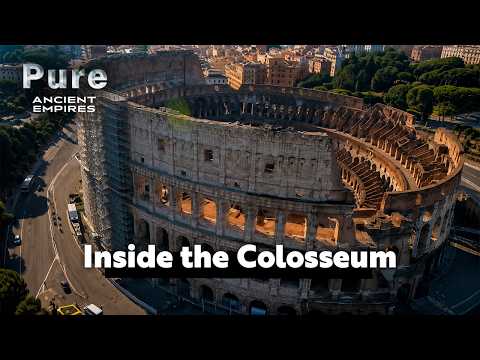
The Colosseum, a symbol of the Roman Empire's grandeur, was not only an architectural feat but also a hub of entertainment featuring gladiatorial combat, naval battles, and elaborate spectacles. This blog post explores its history, construction, and the technological innovations that made it a marvel of ancient engineering.
In the heart of Rome, the Colosseum stands as a testament to the might of the Roman Empire. This monumental structure, known as the Flavian Amphitheater, is celebrated not only for its grandeur but also for the intricate engineering that allowed it to host thrilling spectacles for thousands of spectators.
The Colosseum was constructed during a time of great transformation in Rome, following the chaotic reign of Emperor Nero. After a devastating fire in 64 AD, which destroyed much of the city, Nero seized the opportunity to redesign Rome, including the construction of his extravagant palace, the Domus Aurea. However, following his downfall, Vespasian, a general who rose to power during the Year of the Four Emperors, sought to restore public favor by building the Colosseum on the very grounds of Nero's palace.
The Colosseum was more than just an amphitheater; it was a symbol of the Flavian dynasty's power and a tool for political propaganda. It was designed to host a variety of spectacles, including gladiatorial games, animal hunts, and even naval battles, known as naumachiae. These events were not only entertaining but also served to reinforce the emperor's authority and the might of Rome.
The Colosseum's design was revolutionary for its time. Standing at 40 meters high, it could accommodate around 50,000 spectators. Its oval shape was derived from earlier Roman theaters, but the Colosseum's unique design allowed for better visibility and crowd management. The use of the forx motif, characterized by repeating arches and columns, enabled the construction of this massive structure in record time, completed in just ten years.
The Romans employed advanced engineering techniques, including the use of concrete and the arch, to create a stable and durable structure. The foundations were monumental, measuring 50 meters wide and 12 meters thick, supporting the immense weight of the seating and spectators. The Colosseum also featured a complex system of entrances and exits, allowing for efficient crowd flow, which is comparable to modern stadiums.
Gladiators, often slaves or prisoners, became the stars of the Colosseum. They trained in schools known as ludi, where they learned the art of combat. The fights were not merely brutal contests; they were choreographed performances designed to entertain the audience. Different types of gladiators, each with unique weapons and fighting styles, faced off in the arena, captivating the crowds.
In addition to gladiatorial combat, the Colosseum hosted venationes, or animal hunts, where exotic beasts were pitted against each other or against gladiators. These spectacles required the transportation of wild animals from across the empire, showcasing Rome's reach and power. Executions also took place in the arena, often involving condemned criminals who were forced to reenact mythological tales, adding a macabre twist to the entertainment.
One of the most astonishing spectacles was the naumachiae, where the arena was flooded to stage naval battles. This required sophisticated engineering to manage the water supply and drainage, demonstrating the Romans' mastery of hydraulic systems. The Colosseum's design allowed for the quick transformation of the arena from a dry stage to a water-filled battleground.
Despite the decline of the Roman Empire, the Colosseum has endured as a symbol of ancient engineering and entertainment. It has inspired countless structures and remains a focal point of tourism in modern Rome. The papacy later claimed the Colosseum, erecting a cross in the arena to signify its new role in a Christianized Rome.
Recent archaeological efforts continue to uncover the secrets of the Colosseum, revealing insights into the technology and methods used in its construction and operation. From the intricate systems that allowed for the rapid movement of animals and sets to the elaborate decorations that once adorned its interior, the Colosseum remains a subject of fascination for historians and engineers alike.
The Colosseum is not just an ancient ruin; it is a monument to the ingenuity of Roman engineering and the complexities of its society. As we continue to study and explore this iconic structure, we gain a deeper understanding of the cultural and historical significance it holds, both in ancient times and today.



















