This blog post explores the unsettling and bizarre facts about Barbie dolls, from her controversial body image to strange product releases, revealing a darker side to the beloved toy that many may not be aware of.
Barbie has been a beloved toy for generations, often seen as a symbol of beauty and nostalgia. However, beneath the surface lies a collection of dark, creepy, and bizarre facts that many people are unaware of. In this post, we will explore some of these unsettling truths about Barbie dolls that might change the way you view this iconic toy.
Barbie was introduced to the world on March 9, 1959, at the American International Toy Fair in New York. Despite her long-standing popularity, there are some strange aspects of her design that have raised eyebrows over the years. For instance, Barbie did not have a belly button until the year 2000, a full 40 years after her debut. This omission is puzzling, especially considering that even baby dolls typically feature this basic anatomical detail.
One of the more bizarre stories surrounding Barbie is the disappearance of one of her siblings, a doll named Tutti. Tutti was frequently advertised alongside Barbie until 1971, when she suddenly vanished from all marketing materials and store shelves. To this day, no explanation has been provided for her disappearance, leading to speculation and intrigue among collectors. Original Tutti dolls can fetch high prices on platforms like eBay, highlighting the mystery surrounding her fate.
Barbie has long been at the center of body image controversies due to her unrealistic proportions. Critics argue that her exaggerated features, such as a very thin waist and large chest, set an unattainable standard for young girls. If Barbie were a real woman, her proportions would render her physically incapable of normal functions, raising concerns about the impact of such representations on children's self-esteem and body image.
One of the most shocking Barbie products was the 1965 Slumber Party Barbie, which came with a weight loss book that included the phrase "don't eat". This doll also included a scale that indicated an unhealthy weight for a woman of Barbie's height, promoting dangerous body image ideals to young girls. Fortunately, this product was quickly pulled from shelves due to public outcry.
Interestingly, Barbie's full name is Barbara Millicent Roberts. In a bizarre twist, Barbie's relationship status has also been a topic of discussion. In 2004, it was announced that Barbie had broken up with Ken and started dating an Australian surfer named Blaine. This public breakup seemed unnecessary and raised questions about the relevance of such narratives in children's toys.
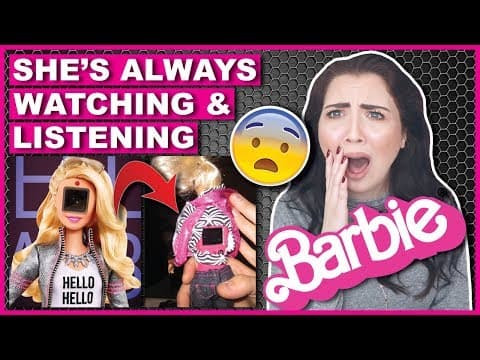
In a concerning trend, some Barbie dolls have been equipped with technology that raises privacy concerns. For example, a version of Barbie was released with a working camera disguised as a necklace, capable of recording up to 30 minutes of video. This led to worries from the FBI about potential misuse of the toy. Another version, known as Hello Barbie, was designed to listen to children's conversations and send the data back to Mattel via Wi-Fi, prompting fears about surveillance and data privacy.
Barbie's popularity faced a significant challenge with the introduction of Bratz dolls, which quickly gained traction among young consumers. In response, Barbie's brand attempted to sue the creators of Bratz, highlighting the competitive nature of the toy industry and Barbie's fear of losing her status as the leading fashion doll.
Several Barbie dolls have been released that sparked controversy and confusion among parents. For instance, the Birds Barbie, inspired by Alfred Hitchcock's film "The Birds", depicted Barbie being attacked by black birds, which many found unsettling. Another example is Tattoo Barbie, which featured tattoos on her body, raising concerns about encouraging young girls to embrace body art at an early age.
Barbie has also been criticized for promoting questionable messages through her dialogue. A talking Barbie doll was released with phrases like "Math class is hard" and "Can you ever have enough clothes?", which many parents found offensive and detrimental to young girls' self-image and intelligence.
In a more recent development, a ghost-themed Barbie was introduced as part of a haunted beauty collection. This doll, described as inhabiting an ancient mansion, adds a spooky twist to the Barbie lineup, showcasing the brand's willingness to explore darker themes.
The world of Barbie is far more complex than many realize. From her controversial design and troubling product releases to the eerie technological features and bizarre narratives, Barbie's legacy is intertwined with unsettling truths. As we reflect on these facts, it becomes clear that the beloved doll is not just a symbol of childhood nostalgia but also a subject of deeper societal discussions about body image, privacy, and the messages we send to young girls. If you have any additional creepy Barbie facts, feel free to share them in the comments below!