
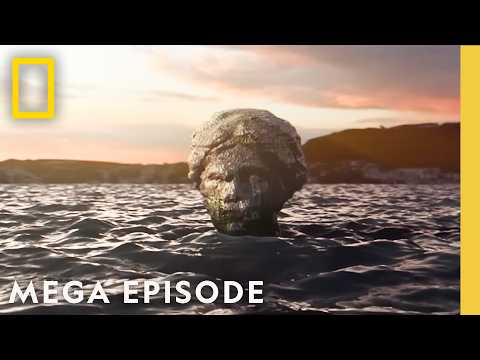
This blog post explores the fascinating discoveries made by draining the oceans to reveal the hidden remnants of ancient civilizations, including the Minoans, Egyptians, and Romans. Using advanced imaging technology, archaeologists have uncovered shipwrecks, architectural marvels, and artifacts that shed light on the lives, beliefs, and technologies of these remarkable cultures.
The mysteries of ancient civilizations have long captivated historians and archaeologists alike. Recent advancements in imaging technology allow us to drain the oceans and reveal the hidden remnants of these cultures, providing unprecedented insights into their lives, beliefs, and technologies. This exploration takes us from the shores of the Mediterranean to the depths of the Nile, uncovering the secrets of the Minoans, Egyptians, and Romans.
The Minoans, who thrived on the island of Crete, are known for their magnificent palaces and vibrant frescoes. However, their civilization began to fade around the 15th century BC, and the reasons for this decline remained a mystery until scientists turned their attention to the nearby island of Santorini.
Marine geologist Evi Nomikou has studied the underwater landscape of Santorini, revealing that it is the remnant of a gigantic volcano. The eruption around 1625 BC was one of the largest in history, sending a column of ash and debris high into the atmosphere and triggering devastating tsunamis that struck Crete. This catastrophic event likely contributed to the collapse of the Minoan civilization, as their ports were destroyed and their economy destabilized.
The ancient Egyptians left behind monumental structures and artifacts, but many of their achievements remain hidden beneath the sands and waters of the Nile. Recent archaeological efforts have focused on uncovering the secrets of the Pharos lighthouse in Alexandria and the Abydos boats.
The Pharos lighthouse, one of the Seven Wonders of the Ancient World, was built in the third century BC. It stood as a symbol of Alexandria's power until it collapsed in the 14th century. Using advanced underwater imaging technology, archaeologists are now working to digitally reconstruct this architectural marvel, revealing its true dimensions and design for the first time in centuries.
In a surprising discovery, a fleet of ancient boats was found buried in the sands of Abydos. These boats, believed to belong to a Pharaoh, were part of a religious expression and were intended to serve the king in the afterlife. The excavation of these boats has provided valuable insights into the beliefs and practices of early Egyptian civilization.
The Roman Empire, known for its engineering prowess and military might, relied heavily on the Mediterranean for trade and transportation. Recent discoveries have shed light on the construction of their ports and the ships that traversed these waters.
Caesarea Maritima, built by the Romans, was an engineering marvel that served as a major trade hub. Archaeologists have uncovered the remains of this grand harbor, revealing how the Romans constructed it using hydraulic concrete, allowing them to build underwater structures that have withstood the test of time.
The Bou Ferrer, a Roman merchant ship discovered off the coast of Spain, carried a valuable cargo of amphorae filled with fish sauce, a staple of Roman cuisine. The shipwreck provides insights into the trade networks of the Roman Empire and the importance of maritime commerce in sustaining its vast population.
The ability to drain the oceans and reveal the secrets of ancient civilizations has transformed our understanding of history. From the Minoans to the Egyptians and Romans, these discoveries highlight the ingenuity, resilience, and complexity of cultures that shaped the world we live in today. As technology continues to advance, we can only anticipate what other secrets lie beneath the waves, waiting to be uncovered.



















