
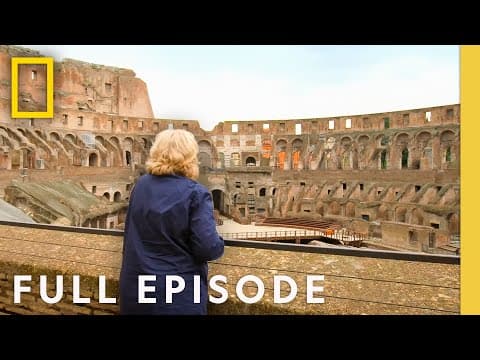
This blog post explores the Colosseum's significance in ancient Rome, its architectural marvels, and the recent archaeological discoveries that shed light on its history and purpose as a symbol of Roman power and entertainment.
In the heart of Italy, archaeologists have made a groundbreaking discovery: a long-lost Roman amphitheater buried for over a millennium. This revelation opens a window into the past, allowing us to explore the Colosseum's role as a monumental symbol of the Roman Empire, famous for its gladiatorial contests and grand spectacles.
The Colosseum, completed in 80 AD, was a gift from Emperor Vespasian and his son, Titus, to the people of Rome. With a capacity of 50,000 spectators, it became a central hub for entertainment, showcasing the brutal and thrilling gladiator fights that captivated the Roman populace. British archaeologist Valerie Higgins, who has dedicated her life to studying ancient Rome, seeks to understand how this colossal structure became synonymous with the empire itself.
The Colosseum's weathered facade today hides the grandeur of its original marble adornments. Statues of gods and goddesses once graced its arches, and the arena was designed to impress. Valerie's exploration of the subterranean areas reveals intriguing features, such as holes surrounded by white stone, suggesting the presence of machinery that facilitated the spectacular shows above.
Valerie uncovers evidence of ramps and pulleys that delivered wild animals and gladiators into the arena, creating an illusion of magic for the audience. The shows began with hunts, followed by gruesome executions, culminating in the fierce battles between gladiators. The Romans went to extraordinary lengths to entertain their vast crowds, and Valerie's investigation aims to uncover the secrets behind these elaborate performances.
In Volterra, Tuscany, a team of archaeologists has unearthed a previously unknown amphitheater, providing crucial insights into the Colosseum's significance. Led by Elena Sorge, the team discovers a long-lost structure that raises questions about its purpose and the cultural dynamics of the region. The Etruscans, who inhabited this area before Roman rule, built this amphitheater, prompting inquiries into why a Roman-style structure was erected in a non-Roman territory.
The excavation reveals a vase dating back 1,500 years, which could help date the amphitheater. Although no stamp was found, the vase represents a human connection to the past. As the team continues to dig, they uncover a tunnel that has remained untouched for over a millennium, further deepening the mystery of this ancient site.
Meanwhile, in Richborough, England, archaeologist Tony Wilmott leads a dig at another buried Roman amphitheater. This site, which has not been excavated for 150 years, reveals a structure made from local chalk blocks, suggesting an early construction date. The amphitheater's design and materials provide insights into Roman architectural practices and the cultural significance of such venues in the provinces.
Both the Colosseum and the newly discovered amphitheaters served as tools for the Roman Empire to assert its power and influence. The gladiatorial games were not merely entertainment; they were a means of social control, reinforcing the hierarchy of Roman society. Valerie's research indicates that attending these games was a social performance, reminding spectators of their place within the empire.
Valerie draws parallels between the Colosseum and the Theatre of Pompey, built a century earlier. Both structures served as platforms for political power, with the Colosseum designed to win popular support for the emperors. The architectural similarities suggest a deliberate effort to connect entertainment with the political ambitions of Rome's leaders.
As the Roman Empire evolved, so did the perception of the amphitheater. By the 5th century AD, gladiatorial games began to decline, culminating in their eventual ban by Emperor Honorius in 404 AD. The Colosseum transformed from a site of brutal entertainment to a symbol of martyrdom for early Christians, reflecting the changing values of Roman society.
The Colosseum and its counterparts across the Roman Empire represent more than just architectural feats; they embody the complexities of Roman culture, power, and social order. As archaeologists continue to uncover the secrets of these ancient structures, we gain a deeper understanding of how the amphitheater served as a microcosm of Roman life, reflecting both the grandeur and the brutality of one of history's most powerful empires. The legacy of the Colosseum endures, reminding us of the intricate relationship between entertainment, politics, and society in ancient Rome.



















