
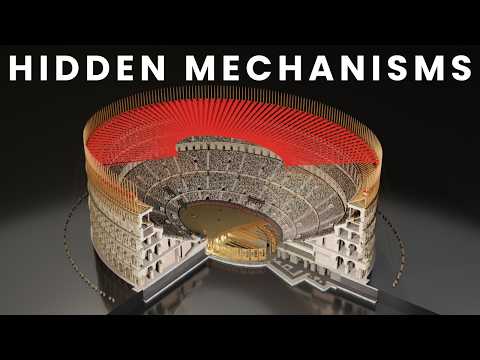
The Colosseum, a symbol of ancient Rome, was not only an architectural wonder but also a complex arena with hidden mechanisms that facilitated grand spectacles, including gladiatorial games and naval battles. This blog post explores its ingenious design, construction, and the innovative systems that made it a remarkable feat of engineering.
The Colosseum, an iconic symbol of ancient Rome, stands as one of the greatest architectural achievements of the ancient world. This massive arena was used for gladiatorial games and public spectacles, showcasing Roman ingenuity and engineering prowess. However, the grandeur of the Colosseum extends beyond its impressive exterior; it conceals a hidden world beneath the arena floor that brought these spectacles to life.
The underground network of the Colosseum featured tunnels and chambers where gladiators prepared for battle, wild animals were kept, and elaborate stage effects were orchestrated. This complex system was essential for the seamless execution of events, allowing for dramatic entrances and exits of both gladiators and animals.
Located in the heart of Rome, the Colosseum was not just an arena for gladiator battles; it was the center of a bustling part of the city. Surrounding the Colosseum were significant structures:
Originally named the Flavian Amphitheater after the Flavian dynasty of emperors who built it, the Colosseum measures over 50 meters tall and stretches 189 meters long by 156 meters wide. It could accommodate more than 50,000 spectators, making it the largest Roman amphitheater ever built. The arena floor, measuring 83 by 48 meters, was covered with sand to absorb blood and provide traction for the gladiators.
Construction of the Colosseum began in 72 AD and was completed in just eight years, showcasing the Roman Empire's exceptional resources and organizational ability. The foundation, crucial for its stability, was built with two layers of ancient Roman concrete, ensuring the structure could withstand the test of time.
The Colosseum was divided into four levels, each featuring a series of arches supported by columns representing the three orders of ancient Greek architecture: Doric, Ionic, and Corinthian. This design choice not only showcased architectural progression but also reflected Rome's adaptation of Greek traditions.
The seating arrangement within the Colosseum reflected the social hierarchy of ancient Rome:
This stratification provided a glimpse into the economic disparities of Roman society while allowing all classes to witness the spectacles.
One of the most extraordinary events held in the Colosseum were the naval battles, or naumachiae. These spectacles transformed the arena into a water basin where warships reenacted famous naval conflicts. The arena floor was designed to be removed, allowing it to be flooded with water from nearby aqueducts, demonstrating Rome's engineering prowess.
About a decade after the Colosseum's inauguration, a two-story masonry structure called the Hypogeum was built beneath the arena floor. This underground complex served as the backstage area for gladiators, animals, and props, facilitating the logistics of the games. The Hypogeum featured a central corridor flanked by lateral passages, allowing for the seamless movement of participants.
The Colosseum employed a system of 28 lifts that hoisted caged animals directly onto the arena floor. Each lift required a team of eight workers to operate, showcasing the complexity of the logistics involved in staging events. Additionally, mobile platforms were used to transport props, enhancing the theatricality of the performances.
To protect spectators from the scorching sun, the Colosseum featured a massive retractable awning called the Valarium. This engineering marvel consisted of long strips of fabric that could be deployed independently, requiring a coordinated effort of at least 240 individuals to operate.
The Colosseum was used for nearly 500 years, hosting some of the most spectacular events in history. Though its games have long ended, it still stands today as a testament to Roman ingenuity and a reminder of a civilization whose ambition shaped the world we know. The hidden mechanisms and innovative designs of the Colosseum continue to fascinate and inspire, revealing the remarkable capabilities of ancient Rome.



















