
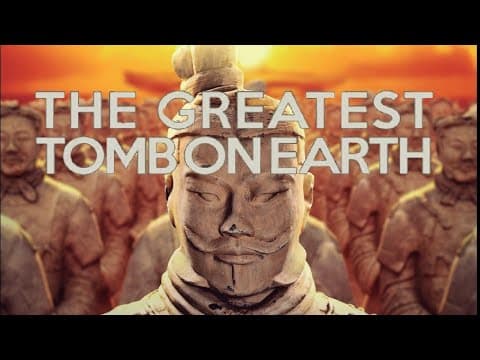
The Terracotta Army, a monumental burial site of China's first emperor, reveals potential connections between Eastern and Western cultures, challenging long-held beliefs about China's historical isolation. Recent discoveries suggest that Western artistic techniques and possibly even Western artisans influenced the creation of the Terracotta Army, indicating a complex cultural exchange that predates known historical interactions.
Millions of people have marveled at the Terracotta Army, one of the most significant archaeological discoveries in history. This vast burial site, located near Xi'an, China, is home to thousands of life-sized figures that were created to accompany the first emperor of China, Qin Shi Huang, in the afterlife. However, recent investigations suggest that the story of the Terracotta Army may be more complex than previously thought, hinting at a cultural exchange between East and West that could rewrite history.
The Terracotta Army consists of over a thousand warriors, each uniquely crafted to guard the emperor in his eternal rest. This extraordinary collection is not just a testament to the artistry of ancient China but also a potential key to understanding the connections between different cultures. The site itself is massive, covering an area 200 times larger than Egypt's Valley of the Kings, and archaeologists continue to uncover new discoveries that challenge the notion of China's historical isolation.
Traditionally, it was believed that China developed in isolation until the arrival of Marco Polo in the 13th century. However, new evidence suggests that the artistic techniques used to create the Terracotta Army may have been influenced by Western methods. This theory posits that the first emperor may have imported ideas and techniques from the West, leading to a significant transformation in Chinese art.
Before the Terracotta Army, Chinese figures were small and simplistic. The sudden emergence of life-sized, realistic sculptures marks a dramatic shift in artistic expression. This evolution raises questions about the sources of inspiration for these artisans. The craftsmanship displayed in the Terracotta Army is unlike anything seen in China prior to its creation, suggesting that external influences played a crucial role.
To explore these connections, a team of experts, including medical scientist Alice Roberts and archaeologist Albert Lin, embarked on a journey to uncover the secrets of the emperor's mausoleum. Their investigation involved examining human remains and utilizing advanced imaging technology to search for evidence of Western influence.
Alice Roberts focused on human remains found near the burial site, while Albert Lin surveyed the area for signs of ancient roads that could have facilitated cultural exchange. Their findings suggest that the first emperor may have constructed a network of roads that connected China to the West, potentially allowing for the movement of people and ideas.
The Terracotta Army is believed to be a direct reflection of the first emperor's desire to create a lasting legacy. The figures were crafted using techniques that may have been introduced by Western artisans. Evidence of mass production techniques, such as the use of molds, indicates a sophisticated understanding of sculpture that aligns with practices seen in the Mediterranean.
The possibility that foreign artisans contributed to the creation of the Terracotta Army is supported by the discovery of terracotta figures with distinct anatomical features that differ from typical East Asian characteristics. This suggests that there may have been individuals from outside China involved in the artistic process.
Albert Lin's investigation into the emperor's road network revealed potential pathways that could have connected China to the West. The discovery of ancient roads leading towards the western regions of China supports the idea that there was a significant exchange of culture and ideas long before the Silk Road became established.
Further evidence of Western influence was found in the form of bronze sculptures discovered near the emperor's tomb. The techniques used to create these sculptures, particularly the direct lost wax method, are believed to have originated in the Mediterranean. This suggests that the first emperor not only imported ideas but also adapted and perfected them, showcasing the ingenuity of Chinese artisans.
The construction of the mausoleum was not without its human cost. Archaeological evidence indicates that many workers, possibly including foreigners, were conscripted to build the emperor's final resting place. The discovery of mass graves containing the remains of young men raises questions about the treatment of laborers during this monumental project.
Alice Roberts' examination of a particular skull suggested features that do not align with typical East Asian characteristics, hinting at the presence of individuals from beyond China's borders. This finding, along with DNA evidence of European mitochondrial lineage found in remains from the region, supports the theory of a diverse workforce involved in the construction of the mausoleum.
The investigation into the Terracotta Army and the emperor's mausoleum reveals a complex narrative of cultural exchange between East and West. The evidence suggests that the first emperor of China was not only a unifier of his nation but also a visionary who sought to incorporate foreign ideas and techniques into his legacy. This challenges long-held beliefs about China's historical isolation and highlights the interconnectedness of ancient civilizations.
As new discoveries continue to emerge from this vast archaeological site, our understanding of the past will undoubtedly evolve, offering deeper insights into the relationships that shaped the world we know today.



















