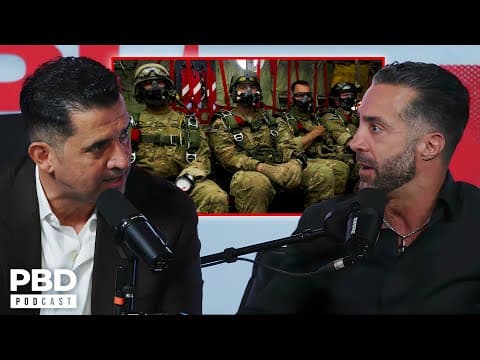
A chilling account from a Venezuelan security guard describes the use of advanced sonic weapons by US forces during an operation against Maduro loyalists. The weapon caused severe physical symptoms like bleeding and vomiting, incapacitating hundreds with minimal US casualties. Experts discuss the existence and implications of such technology, linking it to past incidents like Havana Syndrome and highlighting the strategic role of US Delta Force.
Recent reports have surfaced alleging the use of advanced sonic weapons by US forces during a military operation in Venezuela targeting troops loyal to President Nicolas Maduro. These claims, shared by a Venezuelan security guard and retweeted by journalist Caroline Levit, describe a terrifying encounter involving technology that incapacitated hundreds of soldiers with minimal US casualties.
A Venezuelan security guard loyal to Maduro provided a chilling testimony about the operation. According to him, the attack began without warning:
Despite being heavily outnumbered, the Venezuelan troops were overwhelmed. The guard described the attackers firing with incredible precision and speed, likening their rate of fire to 300 rounds per minute per soldier.
When asked about their weapons, the guard stated they were ineffective. The attackers deployed a weapon that emitted an intense sound wave, causing severe physical symptoms:
The result was a massacre with hundreds of Venezuelan soldiers killed and no casualties among the attackers. The guard warned others in the region to reconsider confronting the United States, emphasizing the overwhelming technological advantage.
The guard expressed concern about the broader implications for Latin America, especially after statements from former US President Donald Trump suggesting Mexico was on a list of targets. The incident has reportedly shifted the tone across the region, with many now wary of confronting US forces.
While the account is gripping, some commentators have questioned its authenticity, noting the narrative's potential to instill fear and influence regional politics. The story's style and details have been compared to carefully crafted narratives designed to send a message.
Verification efforts, including checks on fact-checking sites like Snopes, have not conclusively confirmed the story. However, the possibility of such technology existing is supported by discussions with military personnel.
Military experts and insiders have acknowledged the development and deployment of sonic weapons over the past 15 years. These weapons are designed to incapacitate rather than kill, causing symptoms such as dizziness, nausea, and disorientation.
The phenomenon known as "Havana Syndrome," first reported in 2016 among US diplomats and intelligence officers in Cuba, involved similar neurological symptoms, including head pressure, dizziness, vomiting, and cognitive issues. Subsequent reports emerged from China, Europe, and other locations, suggesting the use of directed energy or sonic weapons.
The use of such weapons aligns with a strategic approach to minimize casualties while achieving operational objectives. Instead of mass casualties, sonic weapons can incapacitate enemy forces effectively.
The United States spends more on defense than the next ten countries combined, enabling the development of cutting-edge military technologies. This financial advantage supports the deployment of advanced weapons systems, including sonic and hypersonic weapons.
The US Delta Force has been highlighted as a key player in such operations. Known for their precision and advanced capabilities, Delta Force operators reportedly conducted the Venezuelan operation with remarkable efficiency.
One commentator shared personal insights, noting the Delta Force's readiness and technological superiority. The unit's ability to execute complex missions with minimal casualties underscores the US military's strategic advantage.
China's development and sale of anti-stealth radar systems, such as the JY 27A, have been noted in the context of Venezuela. These systems are designed to detect stealth aircraft and have been sold to countries like Pakistan.
The interplay of advanced radar and sonic weaponry illustrates the evolving nature of modern warfare, where technology plays a decisive role.
Sonic weapons are not only used in warfare but also for crowd control and dispersing protests. Devices emitting intense sound waves or alarms can effectively control crowds without resorting to lethal force.
Examples include fire alarms in public venues, which prompt immediate evacuation, demonstrating how sensory disruption can influence behavior.
The alleged use of sonic weapons in Venezuela represents a significant development in modern military tactics, emphasizing technological superiority and non-lethal incapacitation. While some skepticism remains regarding the specific incident's details, the existence and deployment of such weapons are supported by historical incidents and expert testimony.
This event has broader implications for regional security in Latin America and highlights the strategic capabilities of US special forces like Delta Force. As military technology continues to advance, the nature of conflict and deterrence is evolving, with sonic and hypersonic weapons playing an increasingly prominent role.
Understanding these developments is crucial for policymakers, military strategists, and the public to navigate the complex landscape of modern warfare and international relations.