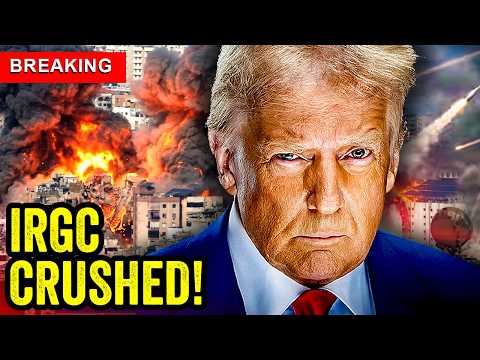
In a cataclysmic 10-day campaign, US and Israeli forces have struck over 10,000 targets across Iran, obliterating the IRGC headquarters, sinking naval vessels, and grounding the air force. This has caused severe degradation of Iran's military capabilities and opened a political rift within the regime, potentially paving the way for a restructuring of Iran's leadership.
The ongoing conflict involving Iran has reached a staggering level of intensity and destruction. Over the course of just 10 days, US and Israeli forces have launched a coordinated and devastating airstrike campaign that has fundamentally crippled Iran's military capabilities and shaken the very foundations of its regime.
According to assessments from the US Central Command (SenCom), more than 10,000 targets have been struck across Iranian territory in the first 10 days of the conflict. These targets include:
The Iranian navy has been eviscerated, with footage showing Iranian naval vessels being destroyed by allied strikes. Senator Marco Rubio confirmed the severe damage to Iran's navy.
The Iranian Air Force has been grounded, with missile launches collapsing from the first day of the operation. By March 8th, the Israeli Defense Forces (IDF) reported approximately 3,400 strike sorties throughout Iran, disabling over 150 air defense systems and destroying around 300 ballistic missile launchers.
The US and Israeli forces have geographically divided Iran for operational purposes:
Together, their combined campaign has struck upwards of 10,000 targets in Iran, plus over 600 targets in Lebanon against Hezbollah.
SentCom released footage showing a direct missile hit on the Islamic Revolutionary Guard Corps (IRGC) headquarters in Tehran, completely obliterating the structure. The IRGC's internal security command for the Tehran region, which coordinated suppression of Iranian protests, was also destroyed.
Over 50 senior Iranian military leaders have been wiped out, severely degrading the command and control capabilities of the IRGC.
Former President Donald Trump stated that the war is "very complete pretty much," noting that Iran has no navy, no communications, and no air force left. He also mentioned that the US is far ahead of the initial four to five week timeline.
Fox News reported a significant reduction in missile launches from Iran, with a 10-hour lull in launches overnight, indicating difficulties in launching attacks. President Trump noted that there were times when 100% of Iranian missiles were shot down.
The IRGC operates under a decentralized defense doctrine called the Mosaic, which splits the force into 31 largely independent regiments. This allows provincial commanders to act autonomously if top leadership is wiped out.
However, the Mosaic's Achilles heel is the difficulty in launching coordinated attacks due to the destruction of command, control, and communications infrastructure. This has resulted in sporadic and uncoordinated missile and drone strikes.
The conflict has caused extreme volatility in energy markets. On Monday, Brent crude oil surged past $119 a barrel, the largest single-day spike since 2020, due to frozen tanker traffic in the Strait of Hormuz. However, after President Trump stated the war was nearly complete and promised to hit Iran harder, oil prices plunged to around $88 a barrel.
This volatility highlights the vulnerability of savings and retirement funds tied to market fluctuations, emphasizing the need for diversification and protection.
Geopolitical analyst Zanbra highlighted that the US military campaign has delegitimized the Islamic Republic as a functioning governance entity and is in the process of delegitimizing the IRGC as a military force.
The campaign aims to prevent the reemergence of threats such as nuclear missiles over the next decade and to enable more pragmatic political actors like President Masoud Peskian to take power.
Iran's Supreme Leader is the highest authority, controlling the armed forces, IRGC, judiciary, state media, and foreign policy. The President, elected every four years, manages domestic and economic affairs but operates under the Supreme Leader's authority.
The strikes have created a crisis in leadership, with uncertainty about the status of the Supreme Leader's son, Moaba Khamenei, who has not appeared since the conflict began.
President Peskian recently apologized to Gulf States for Iranian attacks and announced a ceasefire order for Iranian forces unless attacked first. However, the IRGC continued missile strikes on Gulf States, including drone attacks on Dubai International Airport and explosions in Abu Dhabi.
This indicates a clear rift between the presidential faction and the IRGC/Supreme Leader faction.
The ongoing airstrikes are not only degrading Iran's military capabilities but also dismantling the regime's infrastructure, creating a power vacuum for more pragmatic leadership to emerge.
The coming days will reveal the extent of the IRGC's continued degradation and the rise of Iran's presidential faction. This could ultimately lead to a decisive end or restructuring of the current regime.
Stay informed on this rapidly evolving situation as it has significant geopolitical and economic implications worldwide. Understanding these dynamics is crucial for anticipating future developments in the Middle East and their global impact.
What are your thoughts on the unfolding situation in Iran? Share your views in the comments section below.