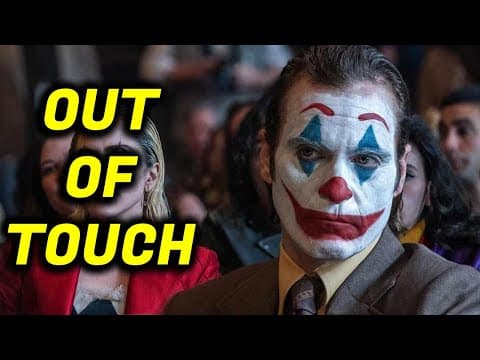
Warner Bros. executives Pamela Abdy and Michael De Luca defended the divisive sequel Joker: Folie A Deux, attributing its failure to being 'too revisionist' for mainstream audiences. Critics and fans, however, widely panned the film for its confusing narrative, tonal shifts, and lack of emotional connection, with many calling it a disappointing follow-up to the original Joker movie.
The sequel to the critically acclaimed and commercially successful film Joker has become a major talking point, but not for the reasons Warner Bros. would have hoped. Joker: Folie A Deux faced significant backlash and underperformed at the box office, leading to heated discussions about why the film failed to resonate with audiences. Recently, Warner Bros. executives Pamela Abdy and Michael De Luca offered their perspective, attributing the film's failure to its "revisionist" approach.
Pamela Abdy and Michael De Luca spoke to The Wrap about the divisive sequel. Abdy expressed her personal appreciation for the movie, stating, "I really liked the movie. Good fucking no one else did, mate, alright. I still do."
De Luca added that the film was "really revisionist" and suggested that it might have been "too revisionist for a global mainstream audience." He praised director Todd Phillips and screenwriting partner Scott Silver for not repeating themselves in the sequel, a move he implied was bold and unconventional. According to De Luca, most sequels tend to recycle elements that audiences liked from the original, but Joker: Folie A Deux deliberately avoided this.
Despite the executives' defense, many viewers and commentators were highly critical of the film. One commentator likened the sequel to an artist who drastically changed their style in a way that alienated fans, saying, "Imagine if your first album was acoustic and your second album was just farting into the microphone."
The sequel's tonal shift, particularly its transformation into a musical, was described as "asinine" and disconnected from the original film's dark and gritty tone. The courtroom scenes and the portrayal of the Joker character were seen as unconvincing and failed to engage viewers emotionally.
Critics noted that the film lacked coherence, with characters seemingly unsure of their motivations and scenes that led to tangents without meaningful resolution. The ultimate conclusion was described as "one of the most disappointing things you could deliver an audience."
The film's narrative twist, revealing that the protagonist was never truly the Joker and was killed by the "real Joker" at the end, left many feeling misled and dissatisfied. This approach was seen as a betrayal of the audience's investment over two movies.
Questions were raised about the film's budget and where the money was spent. It was suggested that a significant portion went to Todd Phillips and the lead actors, Joaquin Phoenix and Lady Gaga, who reportedly were reluctant to return but were "bribed" to do so.
Lady Gaga's performance was criticized harshly, with one commentator calling her "Lady garbage." Joaquin Phoenix's involvement was also questioned, given the film's reception.
The executives' justification that the film was "too revisionist" and that it was acceptable because it did not repeat the original's formula was met with frustration. Critics argued that the original Joker was a massive success, becoming the highest-grossing R-rated movie at the time, and that the sequel's failure was due to alienating the audience rather than innovating.
One commentator summarized the sentiment by saying, "The problem was that the wrong people liked the first one. They had to turn it on its head and show them why it was stupid of them to ever like it in the first place."
Joker: Folie A Deux serves as a cautionary tale about the risks of drastically changing a beloved character and narrative in a sequel. While Warner Bros. executives stand by the film's creative choices, the overwhelming response from audiences and critics highlights a disconnect between the studio's vision and viewer expectations. The film's failure underscores the importance of balancing innovation with the elements that originally captivated audiences.
The sequel did not create the emotional connection or compelling moments that made the first Joker film memorable, resulting in a widely panned and disappointing follow-up.