In Weld County's Kersey, drivers face $340 photo radar speeding tickets despite Colorado law capping fines at $40 or $80. The town claims a legal carve-out for higher fines if speeding exceeds 25 mph over the limit, but critics argue this violates state law and the town's own ordinance. Legal experts advise challenging these tickets in court, highlighting ongoing disputes over enforcement and revenue motives.
In Weld County, Colorado, a small town named Kersey has become the center of controversy over its photo radar speeding tickets. Drivers passing through a stretch of County Road 49 have been shocked to receive tickets as high as $340, despite Colorado state law capping such fines at $40 for normal roads and $80 in school or construction zones.
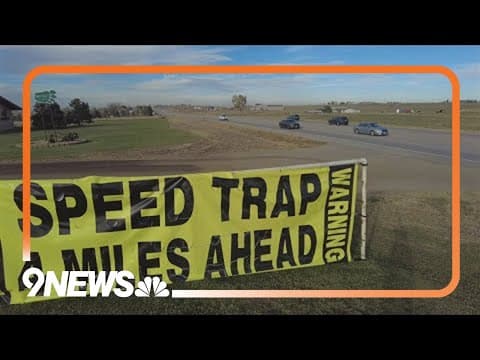
Along County Road 49, a sign warns drivers of a speed trap four miles ahead. The speed limit drops rapidly from 65 mph to 55 mph, then to 45 mph within a quarter of a mile. A photo radar camera is positioned near the 45 mph sign, capturing drivers who fail to slow down in time.
Residents like Tracy Miller and Ashley Morazi have received multiple tickets from this location. Tracy was shocked by a $340 ticket and questioned if it was a typo. Ashley has received six tickets, all weeks after the alleged speeding incidents, and expressed concern over the financial burden of these fines.
Colorado state law recently allowed municipalities to use photo radar for issuing speeding tickets but set strict limits on the fines:
The stretch of road in question is neither a school nor a construction zone, making the $340 tickets appear to violate the law.
Kersey's own ordinance regulating speed cameras also caps fines at $40 to $80. Despite this, since May, the town has collected approximately $316,000 from $340 tickets alone.
Criminal defense attorney Jeremy Lowe explains that while speed traps themselves are legal, the amount charged is not. He emphasizes that the town must adhere to its own rules.
The police chief of Kersey stated that the town increases the charge to $340 if a driver is caught going 25 mph or more over the speed limit. Both Tracy and Ashley were clocked in the 70s mph in a 45 mph zone.
The chief claims a carve-out in state law permits this higher fine, although Democratic state Representative Meg Froelich, who helped draft the law, disagrees. She states that the law was intended as a safety tool, not a revenue generator.
Attorney Jeremy Lowe advises anyone receiving a $340 photo radar ticket in Kersey to challenge it in court. He points out that the law clearly caps fines at $40 and encourages drivers to question the legality of these tickets.
The police chief argues that speeding 25 mph over the limit is a criminal traffic offense that would normally result in points on a license and a court summons if issued by an officer. However, these photo radar tickets do not carry points, only the fee.
When questioned about the town ordinance, the chief said the matter is under internal review.
Many drivers have already paid the $340 fines, contributing to significant revenue for the town. Whether they will receive refunds if the courts rule against the town remains uncertain.
The state law's carve-out and the town's ordinance conflict, making this a likely subject for legal challenges. The upcoming court dates in Kersey are expected to be busy with drivers contesting these fines.
The situation in Kersey highlights the tension between traffic enforcement, municipal revenue, and legal limits. While photo radar is intended to improve road safety, excessive fines beyond legal caps raise questions about fairness and legality. Drivers caught in this speed trap are encouraged to understand their rights and consider challenging questionable tickets in court.
This case serves as a reminder to stay vigilant about speed limits and to be aware of local laws governing traffic enforcement and fines.