
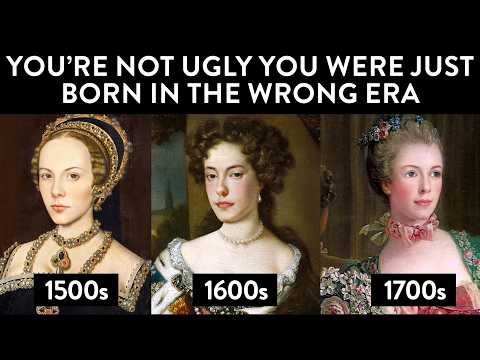
Historical portraits often altered the true appearance of their subjects to align with the beauty standards and cultural values of their time. From the Renaissance to the 1700s French court, portraits were retouched to project power, virtue, and idealized beauty, much like modern photo filters. This article explores how these artistic choices shaped our perception of historical figures and reveals what these portraits might be hiding.
This article delves into the fascinating world of historical portraiture and explores the question: do old portraits truly reflect the real appearance of the people they depict? Through examples and analysis, we uncover how portraits were often altered to fit the beauty ideals and cultural values of their time, effectively serving as the original photo filters.
Consider the portrait of Isabella de Medici, once nearly discarded by the Carnegie Museum as a modern fake. The facial style seemed inconsistent with Renaissance masters. However, X-ray imagery revealed that a 19th-century restorer had "airbrushed" the painting to appeal to Victorian tastes by smoothing her face and refining features like her nose, lips, and hands. Restoring the painting to its original form revealed the true Isabella de Medici, highlighting how portraits could be altered long after their creation.
This question arises frequently when examining historical portraits. Many faces appear similar because portraits were often idealized and retouched to conform to the era's beauty standards. These alterations were not unlike modern photo filters that smooth skin and enhance features.
European monarchs commissioned portraits not just for personal remembrance but to project power, beauty, and cultural values. Understanding a portrait involves asking:
Just as modern headshots smooth blemishes and wrinkles, historical portraits idealized their subjects. Youth and beauty were prized, especially for women. For example, Queen Victoria's 1859 painted portrait was considered accurate until a photograph taken a year later showed a more realistic image. This illustrates how paintings served as filtered versions of reality.
When the author inserted their own face into a Tudor portrait, their natural features appeared angular and out of place. After "Tudor-style" retouching—smoothing brows, softening lips, and reducing nose size—the portrait aligned more closely with period aesthetics, though the resemblance to the real person diminished.
Adjustments to the author's portrait included rounding the jawline, enlarging eyes, and giving the nose a noble curve, reflecting the era's preference for voluptuousness and softness.
The author’s face was inserted into a French portrait, appearing more natural than in previous eras but still subject to retouching to meet the era’s standards.
Historical portraits were not mere snapshots of reality but carefully crafted images designed to convey power, virtue, and beauty according to the cultural norms of their time. They often concealed imperfections and altered features, much like modern photo filters. Understanding these artistic choices helps us appreciate the portraits as cultural artifacts and reminds us to question how accurately they represent the individuals behind the paint.
By examining portraits through the lenses of symbolism, audience, artist intention, and beauty standards, we gain insight into the complex interplay between art and identity in history. Ultimately, portraits reveal as much about the society that created them as they do about the people they depict.



















