
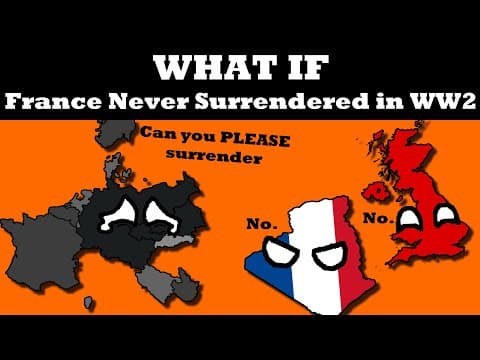
This blog post explores an alternate history scenario where France, instead of surrendering to Germany in World War II, retreats to Algeria to continue fighting. It examines the implications of this decision on the war, French politics, and post-war Europe, highlighting the potential military and diplomatic shifts that could have occurred.
When a nation faces invasion and defeat, it typically has two choices: retreat and continue fighting, or surrender and negotiate terms with the invader. During World War II, we witnessed both strategies in action. For instance, Denmark quickly surrendered and continued to function under German occupation, while the Dutch royal family fled to London to rally resistance against the occupiers. France, however, chose to surrender, legitimizing German control over northern France and establishing a pro-German regime in the south. But what if France had opted to retreat and continue the fight instead?
To understand the implications of France's potential retreat to Algeria, we must first examine the reasons behind its surrender in 1940. France faced overwhelming odds: the British had withdrawn their forces, and approximately 400,000 Belgian and French soldiers were captured. The German military outnumbered the French two to one, and the rapid advance of German forces made it clear that France could not defend its mainland. With Paris falling and Italy entering the conflict, the situation appeared dire.
France's decision to surrender was influenced by several factors:
In this alternate scenario, we imagine that France, instead of surrendering, retreats to Algeria to continue the fight against the Axis powers. This decision would have significant implications for the course of World War II.
No Vichy France: The establishment of Vichy France allowed Germany to claim legitimacy over the French government, facilitating collaboration and control over French colonies. Without Vichy, the French colonial empire would remain a significant ally to Britain, complicating German plans in North Africa.
Military Ramifications: With French forces regrouping in Algeria, the Allies would have a stronger presence in North Africa. This could lead to a more coordinated effort against Axis powers in the region, potentially altering the dynamics of the North African campaign.
Political Landscape: Pétain, now leading a government in exile, would still pursue his vision of a reformed France, but as an ally of Britain and the United States. His authoritarian tendencies might be tempered by the need for cooperation with the Allies, leading to a different political trajectory for post-war France.
Altered European Dynamics: The absence of Vichy France would mean that Germany could not easily legitimize its occupation of France. This could lead to increased resistance movements within France and a more unified front against German occupation.
Impact on Italy: With French forces actively engaged in North Africa, Italy's western border would be threatened. This could lead to a quicker collapse of the Italian regime, forcing Germany to divert resources to defend its southern flank.
Asia and the Pacific: The situation in French Indochina would also change. Without the Vichy regime, Japan's ambitions in the region might be curtailed, leading to a different trajectory for U.S.-Japan relations and potentially delaying or altering the events leading to Pearl Harbor.
As the war progresses, the decision for France to continue fighting from Algeria would have profound military implications:
The post-war landscape would also be significantly altered:
In this alternate history scenario, France's decision to retreat to Algeria instead of surrendering would have far-reaching consequences for World War II and the post-war world. The dynamics of military engagements, political alliances, and the future of European unity would all be profoundly affected. Ultimately, this exploration highlights the delicate balance of choices made during pivotal moments in history and their lasting impact on global events.



















