
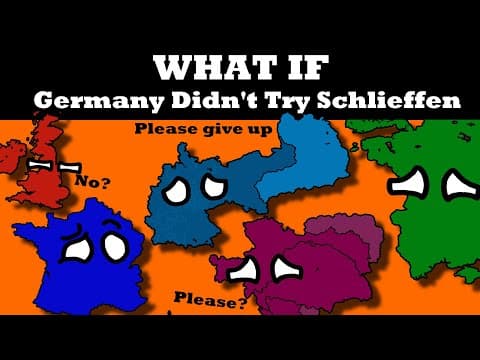
This article explores an alternate history scenario where Germany prioritizes defeating Russia over executing the Schlieffen Plan in World War I. It examines the strategic implications, potential outcomes, and the challenges faced by Germany in this alternate timeline, ultimately concluding that while there may be some advantages, the fundamental issues of a prolonged war and the resilience of the Allies would still lead to a challenging situation for Germany.
World War I is often remembered for its complex strategies and the pivotal decisions made by the nations involved. One of the most discussed strategies is Germany's Schlieffen Plan, which aimed to quickly defeat France by invading through Belgium before turning to face Russia. However, what if Germany had chosen a different approach? What if they had focused on defeating Russia first instead? This article delves into this alternate history scenario, examining the potential implications and outcomes of such a strategy.
The Schlieffen Plan was Germany's military strategy designed to avoid a two-front war by swiftly defeating France before turning to confront Russia. The plan involved invading neutral Belgium to outflank French defenses, capturing Paris, and encircling the French army. However, the plan relied on a strict timeline and faced numerous challenges, including unexpected Belgian resistance, rapid Russian mobilization, and the timely arrival of British forces.
In an alternate scenario where Germany prioritizes defeating Russia, several advantages could be considered:
However, despite these potential benefits, there were significant challenges and risks associated with this strategy.
The German military leadership was historically inclined towards quick, decisive victories, as seen in their previous conflicts leading to unification. The idea of engaging in a prolonged war, especially against a vast nation like Russia, was contrary to their military philosophy. Committing to a long war against Russia would have been seen as a strategic gamble with low odds of success, given the economic and military advantages held by the Allies.
Germany's economic capabilities were not on par with those of the British Empire, which had a vast global reach. The Allies dominated shipping lanes and had greater access to resources, which would hinder Germany's war efforts. While Germany could focus on Russia, France and Britain would have the opportunity to strengthen their defenses in the west, potentially leading to a more fortified Allied front.
Assuming Germany declares war on Russia first, the initial stages of combat would likely see significant German victories due to their superior numbers and military organization. However, logistical challenges and the harsh Russian winter would eventually stall their advance. The Russian army, despite early defeats, would regroup and adapt, leading to a prolonged conflict.
In this alternate timeline, Austria-Hungary might have fared better against Serbia and the Russians due to Germany's immediate pressure on the Eastern Front. This could have allowed Austria to maintain a more significant role in the conflict, potentially leading to greater successes.
Despite Germany's focus on Russia, it is unlikely that Britain would remain neutral for long. The British government faced internal pressures to support France, and public sentiment was already leaning towards intervention. As news of German actions spread, Britain would likely join the war, further complicating Germany's position.
As the war progressed, the balance of power would still favor the Allies. Even with early German successes in the east, the Western Front would remain a stalemate. The Allies would have the opportunity to reinforce their positions and launch counter-offensives, potentially leading to a war of attrition that favored them.
If Germany managed to defeat Russia, the question remains: what next? The Western Front would still be heavily fortified, and Germany would face the challenge of forcing a surrender from the Allies after allowing them years to prepare. The hope that the Allies would simply give up would be a dangerous gamble, as the war would likely drag on with no clear path to victory.
In conclusion, while the idea of Germany focusing on Russia first in World War I presents some intriguing possibilities, the fundamental challenges of a prolonged conflict and the resilience of the Allies would still pose significant obstacles. The risks associated with such a strategy, combined with the historical context of military and economic realities, suggest that this alternate plan would likely lead to a complex and challenging outcome for Germany. Ultimately, the war's conclusion would still hinge on the broader dynamics of power, diplomacy, and the enduring spirit of the nations involved.



















