
This blog post explores an alternate history scenario where Germany faced a less punitive Treaty of Versailles after World War I. It examines the implications of a more lenient peace treaty on Germany's political landscape, economy, and international relations, ultimately leading to a different trajectory for Europe leading up to World War II.
The Treaty of Versailles, signed in 1919, imposed severe penalties on Germany following its defeat in World War I. Many historians argue that the harsh terms contributed to the rise of extremism in Germany and the eventual outbreak of World War II. This post explores an alternate history scenario where Germany is punished less at Versailles, examining the potential outcomes for Germany and Europe.
The Treaty of Versailles was characterized by its punitive measures against Germany, including territorial losses, military restrictions, and heavy reparations. The treaty aimed to prevent Germany from rising to power again, but it also destabilized the Weimar Republic, leading to economic hardship and political extremism.
In this alternate scenario, we propose that the United States, under President Woodrow Wilson, exerts more influence over the peace negotiations, advocating for a more forgiving treaty. This would involve several key changes:
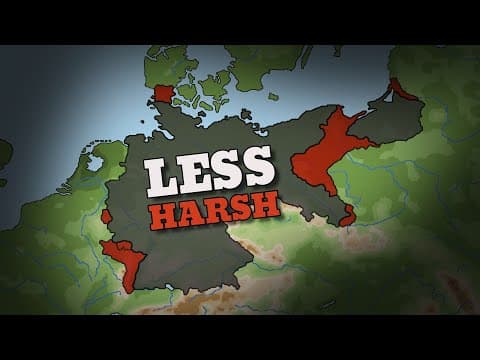
Historically, the Danzig Corridor was given to Poland to provide it with access to the sea, separating East Prussia from mainland Germany. In our alternate history, Germany retains this territory, which would help mitigate nationalist sentiments. Instead, Poland could establish a protectorate over Lithuania, satisfying its need for a coastline without inciting German nationalism.
The Saarland was occupied by France and subjected to a referendum after 15 years. In this scenario, we propose that the referendum occurs much earlier, perhaps within five years, allowing Germany to regain control before the onset of the Great Depression. This earlier return of the Saarland would bolster Germany's economy and national pride.
While the militarization of the Rhineland was a contentious issue, we suggest setting a distant end date for demilitarization, allowing Germany to gradually rebuild its military without immediate threat from France.
The reparations imposed on Germany were crippling, leading to hyperinflation and economic collapse. In this alternate history, we propose reducing the reparations significantly, allowing Germany to pay in raw materials rather than cash. This change would help stabilize the German economy and reduce humiliation.
With a less punitive treaty, the Weimar Republic might have had a better chance of survival. The economic recovery, aided by American loans, would likely lead to a more stable political environment. While extremist parties could still rise, they would face greater challenges in gaining power without the backdrop of economic despair.
Italy, facing its own economic struggles, would still pursue nationalist ambitions but would not have the same level of support from a strong Germany. The Spanish Civil War would unfold similarly, but without German support, Franco's victory might take longer.
In this alternate timeline, the Soviet Union would still seek to expand but would face a more united front from Western powers. The dynamics in Eastern Europe would shift, with Poland potentially annexing Lithuania and facing Soviet demands for territory, leading to tensions that could spark conflict.
If tensions escalate, the Second World War might still occur, but under different circumstances. The Allies, including a more stable Germany, could confront the Soviet Union earlier, leading to a different balance of power in Europe. The war might start in 1943, with Germany and its allies pushing back against Soviet advances.
This exploration of an alternate history where Germany was punished less at Versailles suggests that a more lenient treaty could have led to a more stable Europe. While the rise of extremism might still occur, the trajectory of international relations and the balance of power would be significantly altered. The implications of such a scenario highlight the complexities of historical events and the delicate interplay of political decisions.
In summary, a less punitive Treaty of Versailles could have fostered a stronger sense of European democracy and stability, potentially averting the catastrophic events of World War II. This thought experiment serves as a reminder of the profound impact of diplomatic decisions on the course of history.



















