
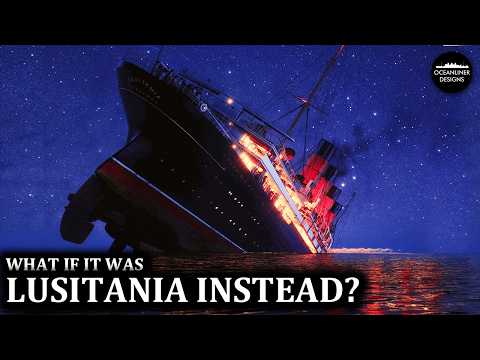
This blog explores a hypothetical scenario where the Lusitania, instead of the Titanic, strikes the iceberg in April 1912. It examines the potential consequences of this disaster, including the differences in ship design, the impact of flooding, and the resulting loss of life. The analysis highlights how the Lusitania's unique features could have led to a more catastrophic outcome than the Titanic tragedy, reshaping historical events and public perception.
April 15, 1912, marks a tragic date in maritime history as the Titanic sank after striking an iceberg. This disaster not only made the Titanic the most famous ship in history but also raised questions about ship safety and design. But what if it had been the Lusitania, another iconic ocean liner, that struck the iceberg instead? This blog post delves into this hypothetical scenario, exploring the potential consequences and differences in design that could have led to a more catastrophic outcome.
The Lusitania was a celebrated ocean liner, known for her speed and luxury. Along with her sister ship, the Mauretania, she held the Blue Riband speed record throughout the 1910s and into the 1920s. However, her fate took a tragic turn in 1915 when she was torpedoed and sunk during World War I, an event that outraged millions. In contrast, the Titanic was lost in a freak accident during her maiden voyage, leaving many to wonder about the ship's construction and safety.
Imagine it is April 1912, and the Lusitania is on her westbound voyage to New York. Commanded by Captain William Thomas Turner, the ship is carrying 2,190 passengers and crew across the North Atlantic. As the ship sails through a clear, cold night, warnings of icebergs have been received, but confidence in the crew's ability to navigate safely remains high.
As the ship speeds through the icy waters, the lookouts spot an iceberg ahead. Despite efforts to steer clear, the Lusitania collides with the iceberg, and the clock begins ticking on a desperate fight for survival.
The collision sends shockwaves through the ship. Passengers are jolted awake as ice tears through the hull. Captain Turner quickly assesses the damage, realizing that flooding has begun in the forward holds and boiler room. Unlike the Titanic, which had 15 watertight compartments, the Lusitania had only 13, and her design would prove critical in the ensuing chaos.
The Titanic's design allowed for a more gradual flooding process, as water would fill compartments sequentially. In contrast, the Lusitania's larger, more voluminous compartments would flood rapidly, leading to a quicker loss of buoyancy. The longitudinal bulkheads designed to protect her machinery spaces could also create a choke point for flooding, causing the ship to list dangerously to one side.
As the Lusitania begins to list, the crew scrambles to launch lifeboats. With only 16 lifeboats available, there is room for approximately 1,040 people, but with over 2,190 on board, the situation is dire. The list makes it nearly impossible to launch boats from one side, while the other side's boats swing dangerously away from the ship.
As the ship tilts further, panic ensues. Lifeboats are launched with difficulty, and some capsized, spilling passengers into the icy waters. The rapid sinking of the Lusitania, estimated to occur within an hour, would lead to a far greater loss of life compared to the Titanic, which sank over a period of 2 hours and 40 minutes.
If the Lusitania had struck the iceberg, the loss of life could have been catastrophic. Estimates suggest that only about 420 passengers and crew might have survived, a stark contrast to the Titanic's tragic toll of 1,496 lives lost. The chaos of the evacuation, compounded by the ship's severe list, would have made it nearly impossible to save many lives.
The ramifications of such a disaster would extend beyond the immediate loss of life. The Titanic's sinking led to significant changes in maritime safety regulations, including lifeboat requirements. If the Lusitania had sunk instead, the historical narrative surrounding maritime safety might have shifted dramatically. The absence of the Lusitania could have altered public sentiment during World War I, potentially affecting U.S. involvement in the conflict.
The hypothetical scenario of the Lusitania hitting the iceberg instead of the Titanic raises intriguing questions about design, safety, and historical impact. While both ships were marvels of engineering, their differences in design and construction would have led to a more disastrous outcome had the Lusitania faced the iceberg. This thought experiment not only highlights the fragility of human endeavors but also serves as a reminder of the lessons learned from maritime tragedies that continue to shape safety standards today.



















