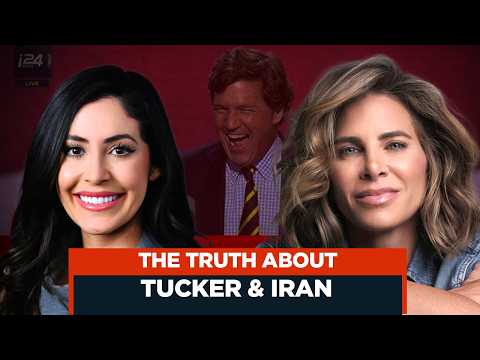
Tucker Carlson has revealed that the CIA is preparing a criminal referral against him for allegedly violating the Foreign Agent Registration Act due to his communications with people in Iran. While Carlson denies any wrongdoing, concerns have been raised about potential double standards in enforcement and the CIA's surveillance practices. The situation highlights the complex intersection of journalism, national security, and free speech.
Recently, Tucker Carlson, a prominent media figure, disclosed that the CIA is preparing a criminal referral against him to the Department of Justice. The alleged crime involves his communications with individuals in Iran, potentially violating the Foreign Agent Registration Act (FARA). This blog post explores the details of this situation, the implications for journalism and national security, and the broader concerns it raises.
Tucker Carlson addressed the allegations in his own words, explaining that the CIA is considering a criminal referral against him based on supposed crimes related to his communications with people in Iran before any war. He stated:
"The crime under consideration apparently would be the Foreign Agent Act or something like that — acting as an agent of a foreign power."
Carlson firmly denied these accusations, emphasizing his loyalty to the United States and asserting that he has never acted against its interests. He also highlighted that he has never taken money from any foreign entity and that his job requires him to talk to people worldwide to understand global affairs. He expressed confidence that the case would not proceed:
"I'm not too worried about an actual criminal case against me for a bunch of reasons. One, I'm not an agent of a foreign power. Unlike a lot of people commenting on US politics and global affairs, I have only one loyalty and that's the United States."
An individual who met Tucker Carlson backstage at an event shared their views on the situation. They acknowledged the discomfort caused by the CIA reading someone's text messages, regardless of political stance. The person speculated whether the communications were incidentally collected during intelligence monitoring of Iranian communications, rather than targeted surveillance.
They noted that the CIA might be attempting to charge Carlson under FARA, which applies to individuals advocating on behalf of foreign countries. However, they raised concerns about fairness and consistency in enforcement, pointing out that others who have allegedly violated foreign agent laws have not faced charges.
The discussion highlighted a perceived double standard in how foreign agent violations are handled. For example, someone named Neville Rosingham was mentioned as allegedly engaging in foreign violations without facing charges, contrasting with the scrutiny on Carlson.
There was also speculation about whether the CIA's actions were directed by the current administration or if the agency was independently conducting surveillance beyond its mandate. It was suggested that the CIA might be engaging in unauthorized snooping, which raises serious concerns about privacy and government overreach.
The line between journalism and advocacy was discussed as a complex and dangerous one. Carlson's work includes interviews with figures that mainstream media often avoid, such as Vladimir Putin and other controversial leaders. Some view his interviews as opening dialogue rather than promoting conflict.
The individual commenting acknowledged that while Carlson's political positions might seem extreme or difficult to understand, they could stem from a desire to avoid unnecessary wars and promote peace, especially considering the costly and prolonged conflicts like the Iraq War.
The situation underscores the importance of fairness in applying laws like FARA and transparency in intelligence operations. If Carlson is indeed advocating on behalf of a foreign government, then legal action might be justified. However, if he is simply performing his journalistic duties without foreign influence, then the surveillance and potential charges represent a troubling infringement on free speech and press freedom.
The allegations against Tucker Carlson by the CIA raise critical questions about the balance between national security and civil liberties. The case highlights the challenges journalists face when engaging with foreign sources and the potential risks of government surveillance. As this story develops, it will be essential to monitor how the justice system addresses these concerns and whether intelligence agencies operate within their legal boundaries.
The broader implications for media freedom, government accountability, and the public's right to information remain at the forefront of this unfolding situation.