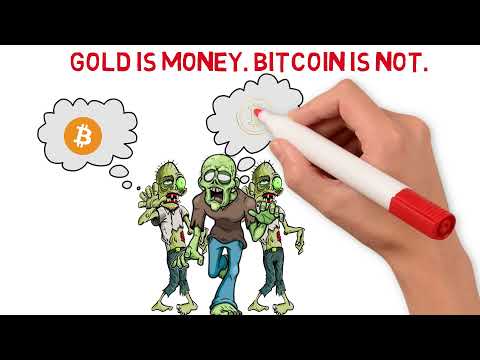
This article explores the argument that Bitcoin cannot be considered money, contrasting it with gold's historical role as a stable currency. It delves into the monetary regression principle, explaining how the value of currencies is derived from their historical connections to gold, and why Bitcoin's value is ultimately tied to the dollar, which itself is a substitute for gold.
In the ongoing debate about cryptocurrencies, particularly Bitcoin, one fundamental question arises: Is Bitcoin money? The short answer is no. The longer explanation reveals that not only is Bitcoin not money, but it can never be considered money, regardless of its dollar price. This assertion often frustrates proponents of Bitcoin, leading to emotional responses and derogatory remarks about traditional forms of currency, such as gold.
To understand why Bitcoin cannot be classified as money, we must first explore the concept of money itself. Money serves as a medium of exchange, a unit of account, and a store of value. For something to function effectively as money, it must have a stable value that people can rely on over time.
Some advocates of Bitcoin and blockchain technology might argue that even non-fungible tokens (NFTs), such as a digital representation of a flatulence, can be considered money because they are powered by blockchain. However, this perspective is misguided. The value of money must be grounded in something more substantial than mere technological novelty.
There are two ways to approach the question of Bitcoin's status as money: empirically and logically. The empirical approach, which focuses on current market trends and prices, is fundamentally flawed. Instead, a logical approach rooted in economic theory provides a clearer understanding.
The key to understanding why Bitcoin can never be money lies in the monetary regression principle, formulated by Austrian economist Ludwig von Mises in his 1912 work, "The Theory of Money and Credit." This principle states that for prices to have meaning, they must connect to a reference point in the past. When you wake up in the morning, you have a general idea of how much things cost based on previous prices. This continuity is essential for a functioning economy.
When Bitcoin was introduced, its value was immediately indexed to the dollar, a currency that existed prior to Bitcoin. This means that Bitcoin's exchange rate with the dollar always relates back to historical values. The dollar itself, however, has its origins as a paper substitute for gold. Thus, the dollar's value is ultimately tied to gold, which has a long-standing history as a stable form of money.
To illustrate this chain of value:
In hyperinflationary economies, the price of gold in terms of currency can skyrocket, leading to a loss of faith in the currency itself. When the dollar can no longer be exchanged for gold, it ceases to be a gold substitute. Consequently, Bitcoin, which is indexed to the dollar, becomes worthless in real terms. If the dollar fails to regress back to gold, Bitcoin's value collapses, regardless of its dollar price.
By the monetary regression principle, it is logically necessary to conclude that gold is money, while the dollar is merely a substitute for gold. Bitcoin, in turn, is a substitute for the dollar, making it a fragile and ultimately unsustainable form of currency. Without a stable reference point, such as gold, Bitcoin's value is destined to become meaningless, leading society back to gold as the only reliable form of money. In this scenario, the division of labor would break down, and we would face a return to a chaotic economic state.
In summary, while Bitcoin may be a fascinating technological innovation, it lacks the fundamental qualities that define money. Gold remains the enduring standard, rooted in historical value and stability, while Bitcoin's future is uncertain and contingent upon the fate of the dollar.