Static shots, where the camera remains completely still, are a powerful filmmaking technique that directs audience attention inward, enhances performance, and enriches storytelling. This article explores how static shots influence composition, blocking, editing, and audience engagement, illustrating their creative potential through examples from renowned films and directors.
Camera movements in films are often used to direct audience attention, reveal settings, or push into characters. However, some of the most memorable shots in cinema do the exact opposite—they stay completely still. This stillness is a deliberate choice that forces every other element of filmmaking to work harder, from production design to blocking to performance.
When the camera stops moving, the shot draws attention inward. Performance becomes character, space becomes setting, and cuts become meaningful. This article breaks down why static shots are so powerful and how filmmakers use stillness to create tension, emotion, and momentum without moving the camera.
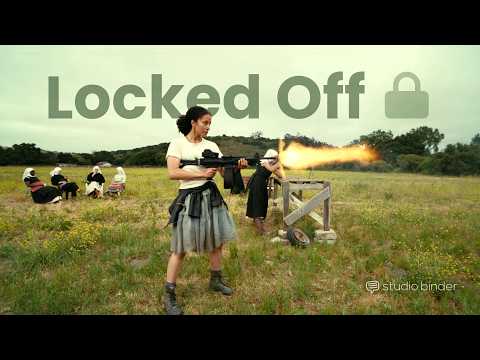
A static shot is one in which the camera remains locked off with no intentional movement—no pans, tilts, zooms, or dolly moves. The camera is placed, the frame is established, and it remains fixed for the duration of the shot. Movement can still exist within the frame as actors move, lighting changes, and the story unfolds, but the defining characteristic is that the camera itself does not move.
Different camera lenses can help keep these motionless shots visually interesting. A static shot is not defined by length; it can be brief or extended.
By fixing the camera, filmmakers establish a set perspective and formal structure. This structure gives weight to everything placed inside the frame. When the camera doesn't move, everything inside the frame suddenly matters more. This is where mise-en-scène takes over—composition, production design, lighting, color, and blocking all work together to create meaning.
In a static shot, composition should do more than just fit all filmic elements aesthetically within the frame; it should create meaning that tells the story visually. For example, around a dinner table, rigidly consistent compositions with drastically changing backgrounds can suggest that characters are disconnected, each perceiving the same space differently.
Composition can convey a character's feelings, relationships, or their connection to the environment. Without camera movement, audiences can explore production design more deeply, noticing visual elements that reveal much about characters or the story setting.
In Paranormal Activity 3, recurring static frames hold for a long time, allowing viewers to scan, predict, and anticipate suspense within a single shot. Color also plays a significant role, with parts of the frame bathed in specific colors to create mood and tone.
A shot from Syndromes and a Century uses mise-en-scène to highlight the clash between modernity and ancient rhythms. The monk's orange robe draws the eye, while modern dental equipment juxtaposed with the forest outside the window builds on the film's central themes.
Because the camera doesn't guide the viewer, the audience becomes more active in exploring the frame and choosing where to look. This participation makes the moment feel more real and immersive.
When the camera remains still, movement must come from within the frame, primarily through blocking—the movement of characters. Characters may enter, exit, cross planes, or change proximity to others, revealing feelings, motives, and conflicts.
Director Dietrich Bugamann uses many long static takes where characters move in and out of the frame, crossing from background to foreground. These blocking choices reveal character emotions and dynamics without cutting.
In Goodbye Dragon End, a static wide shot begins focused on a woman. A man enters, and the camera racks focus to him, effectively creating a close-up and a new dynamic without moving the camera.
Movement in a static frame feels intentional and amplified, allowing small actions to carry significant weight.
Static shots can vary in size, each serving different narrative purposes:
Yasujirô Ozu is renowned for his mastery of static shots, locking the camera and letting audiences decipher subtextual dynamics in conversations.
Static shots radically change how editing works. With a fixed camera, editing determines the pacing of a scene rather than camera movement. Decisions to hold or cut shots influence how long the audience stays with a moment, directly impacting emotional responses.
Holding on a static shot can build tension by refusing relief, while cutting between static shots can create a sense of objective reality.
Director Jonathan Glazer installed cameras all over a house to create a clinical, objective observation of a family amidst atrocities. Cutting between different static shots enhances this detached perspective.
Axial cuts between static shots in 2001 are jagged and cold, mirroring HAL's betrayal. The rapid montage of static shots captures humanity's violent history.
When edited rhythmically, multiple static shots can feel kinetic and dynamic.
Static shots can be ambitious and creatively applied in unexpected ways.
A static shot may appear to move even when it does not. For example, in Eyes Wide Shut, a shot looks like a Steadicam shot but is actually Tom Cruise on a treadmill in front of a rear projection.
A static shot introduces clear limitations that require filmmakers to be intentional with every other cinematic choice—from composition and mise-en-scène to blocking. When the camera remains still, meaning is built through precision, structure, and attention to detail.
Sometimes, the most powerful thing a camera can do is nothing at all.
Static shots are a testament to the power of restraint in filmmaking. By locking the camera, directors invite audiences to engage more deeply with the frame, the characters, and the story. This technique challenges filmmakers to craft every element within the frame with care, resulting in moments of heightened tension, emotion, and meaning that resonate long after the scene ends.