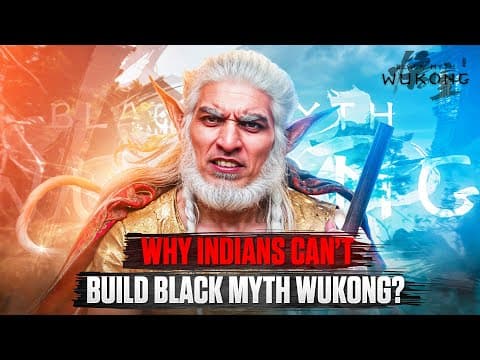
The success of Black Myth: Wukong highlights the challenges India faces in developing AAA games, including a lack of market, investment, and cultural sensitivities. Despite having the talent and technology, the gaming industry in India is not yet ready for such ambitious projects.
The gaming world has recently been abuzz with the phenomenal success of the Chinese game Black Myth: Wukong, which achieved a staggering 2.2 million concurrent players on Steam shortly after its release. This achievement not only sets a record for single-player games but also serves as a case study in effective marketing and strategic partnerships. In this blog post, we will explore the reasons behind Wukong's success and why India is currently ill-equipped to replicate such a feat in the AAA gaming space.
Black Myth: Wukong is not just a game; it is a masterclass in marketing. The developers, Game Science, have made several strategic decisions that propelled the game into the spotlight. One of the key factors contributing to its success is the partnership with Tencent, which owns a 5% stake in Game Science. This relationship likely facilitated crucial deals with American companies, enhancing the game's visibility in pop culture.
Additionally, Game Science has collaborated with major brands like Nvidia, which has been at the forefront of the AI revolution. Securing a partnership with Nvidia to feature the game on their GPUs is a significant achievement that few can match. Furthermore, the anticipation for Wukong was built over several years, with the first demo released back in 2020, allowing fans to engage with the game long before its official launch.
Game Science's marketing strategy included unique partnerships that extended beyond traditional gaming channels. For instance, they collaborated with Luckin Coffee, a popular coffee chain in China, to launch a dedicated Americano named after Wukong, along with exclusive merchandise. This innovative approach helped create a buzz around the game, leading to sold-out products.
Moreover, the game was featured in exclusive promotions with Chinese appliance manufacturer Hense, which launched a special picture mode named after Wukong in select TVs. Such cross-industry collaborations have played a crucial role in establishing Wukong as a cultural phenomenon.
One of the primary reasons India struggles to produce a game like Wukong is the absence of a robust AAA PC game market. Currently, the PC gaming market in India constitutes less than 10% of the mobile gaming market. While mobile games like PUBG can run on entry-level smartphones, many PCs in India are not equipped to handle high-end games like Wukong or Red Dead Redemption 2.
Despite the potential for growth, the Indian gaming industry lacks the necessary investment to develop AAA titles. Game Science invested approximately $75 million over six years to create Wukong, a figure that Indian investors are hesitant to match due to the absence of proven success in the PC gaming sector. Without a successful case study, attracting investment for similar projects remains a significant hurdle.
Cultural factors also play a crucial role in the feasibility of developing AAA games in India. Wukong is based on Chinese mythology, and its narrative allows for creative freedom that may not be as easily accepted in India. The Indian audience has diverse sensitivities, and themes that involve violence against deities or cultural icons could lead to backlash. This cultural landscape makes it challenging to create games that resonate with local audiences while also appealing to global markets.
Despite these challenges, it is essential to recognize that India possesses the talent and technological resources to create AAA games. Many Indian professionals have contributed to major Hollywood blockbusters, and studios like Rockstar Games have established a presence in Bangalore, working on high-profile projects.
Advancements in technology, such as AI and game development tools like Unreal Engine, have made it easier to create high-quality games. However, the real challenge lies in merging artistic vision with technical execution, which requires a unique blend of skills that are currently scarce in the Indian gaming industry.
To overcome these obstacles, India needs visionary leaders who possess a combination of development, design, and marketing skills. Such individuals can navigate the complexities of the gaming industry and take calculated risks to create successful AAA titles. Without this leadership, the potential for Indian mythology and storytelling to shine on a global stage remains untapped.
As a passionate gamer and proud Indian, I hope to see the day when Indian history and mythology are showcased through AAA games. While the challenges are significant, the potential is immense. Until then, it is crucial to approach the idea of investing in AAA game development in India with caution, as the industry continues to evolve and seek its footing in the global gaming landscape.