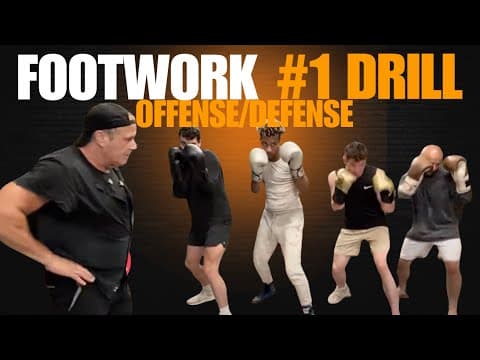
This article breaks down the importance of mastering fundamental footwork in fighting, highlighting common mistakes with flashy but ineffective movements. It emphasizes realistic training distances, proper stance maintenance, and effective angular footwork to improve defense and offense. The insights come from experienced trainers focusing on practical, applicable techniques for fighters of all levels.
Footwork is a foundational skill in fighting, yet many fighters and trainers focus on flashy, complex drills that do not translate well into actual combat. This article explores why mastering the basics of footwork is essential to avoid getting knocked out and how improper footwork can be detrimental in a fight.
David Dice and Allan, experienced trainers working with fighters in Richmond, share their insights on realistic and effective footwork training.
Many trainers teach agility patterns and fancy footwork drills that are not applicable in real fighting scenarios. These flashy movements often serve to show dominance rather than improve fighting effectiveness. Most fighters do not have their fundamentals down, and practicing incorrect footwork can do more harm than good.
Legendary fighters like Mike Tyson and Sugar Ray Robinson did not rely on flashy footwork but mastered fundamental movement that kept them protected and effective.
The foundation of all movement in fighting starts with the correct stance:
Maintaining this stance at all times is crucial. Moving out of this stance should feel "naked" or vulnerable because it means you are exposed.
Using a square marked on the floor and a mirror, fighters can practice moving in and out, left and right, ensuring their feet maintain proper spacing and stance.
Practicing with a partner calling out random directions helps develop reaction time and muscle memory.
After throwing combinations, fighters should move off the center line by cutting angles:
Simply turning without stepping is ineffective and leaves you in your opponent's line of fire.
Training should be done at realistic fighting distances:
Practicing at the correct distance ensures drills translate effectively to real fights.
A practical drill involves:
This drill emphasizes moving after striking, never "admiring your work," and always preparing for the opponent's response.
Training is about perfect practice to make perfect. Repetitions with correct technique build muscle memory and ensure effectiveness in fights.
Coaches must be strict and precise, correcting mistakes immediately to prevent bad habits.
Fighting training also develops fast thinking, self-discipline, physical conditioning, balance, confidence, and focus.
For those interested in comprehensive striking training, resources like Fighters College offer detailed curricula, master classes on footwork and jab techniques, and interactive coaching.
Mastering basic footwork fundamentals is essential for any fighter aiming to improve their game and avoid getting knocked out. Fancy footwork without solid fundamentals can leave fighters vulnerable.
Focus on maintaining the correct stance, moving the right foot first, practicing realistic distances, and cutting angles properly. Consistent, precise practice under knowledgeable coaching will build the skills necessary to excel in the ring or cage.
Remember, fighting is a lonely game that requires dedication, discipline, and perfect practice to achieve perfection.