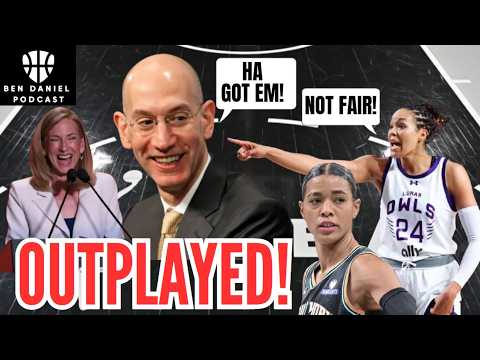
The new WNBA Collective Bargaining Agreement (CBA) has been hailed as a victory by players, but former Miami Marlins executive Dave Samson argues that the deal heavily favors the owners. Despite some salary increases and housing provisions, the revenue sharing remains low, salary caps grow slowly, and minimum salaries still lag behind comparable sports, highlighting the league's current financial limitations.
The recent Collective Bargaining Agreement (CBA) between the WNBA players and the league owners has been widely celebrated by players as a significant victory. However, Dave Samson, a former executive for the Miami Marlins with extensive experience in labor negotiations, offers a contrasting perspective. He asserts that the owners effectively "crushed" the players in these negotiations, securing a deal that benefits them far more than the athletes.
Players have been taking a victory lap, emphasizing the business-like nature of the negotiations and the progress made. Yet, when comparing the owners' initial offer from seven months ago to the final agreement, the improvements are minimal. The revenue sharing remains below 20%, the salary cap is set to grow to $10 million over seven years, and the minimum salary tops out at $300,000.
Samson points out that the owners strategically allowed the players to feel like they had won by making them endure a tough negotiation process. The owners knew the players would settle for the final offer, which was only slightly better than the original proposal. This approach ensured the owners came out "smelling like roses" while the players took the public relations win.
Samson emphasizes that the WNBA is not yet as profitable or valuable as other major sports leagues like the NBA or NFL. Despite the excitement around star players such as Caitlyn Clark and Angel Reese, the league's financial standing limits the owners' ability to offer more lucrative deals.
The revenue sharing percentage and salary caps reflect the league's current profitability. The owners appear to have calculated that they can afford these concessions for now without significant losses, but they are not prepared to offer a larger share of revenue or higher salaries until the league becomes more financially robust.
While the new CBA includes some improvements, many players still face financial challenges. For example, top college players like Juju Watkins, who might earn $765,000 or more playing overseas or in other leagues, have little financial incentive to join the WNBA given the pay cut.
Additionally, despite the introduction of super max contracts and increased salary caps, many players will continue to play overseas in countries like Turkey, China, and Russia to supplement their income.
The new WNBA CBA represents progress but falls short of a transformative deal for players. According to Dave Samson, the owners strategically managed the negotiations to maintain control and limit financial concessions. The league's current financial status constrains salary growth and revenue sharing, leaving players with modest gains relative to their value and the broader sports market.
As the WNBA continues to grow in popularity and profitability, future negotiations may yield better terms for players. For now, the new CBA reflects a cautious approach by owners balancing league sustainability with player compensation.
The WNBA players and fans should recognize the incremental nature of this agreement and the financial realities behind it. While celebrating the deal publicly, it is important to understand the limitations and the owners' strategic positioning in these negotiations.
Let us continue to support the growth of women's basketball and advocate for fair compensation as the league evolves.
Please share your thoughts and reactions to the new WNBA CBA in the comments section. Your engagement is appreciated!