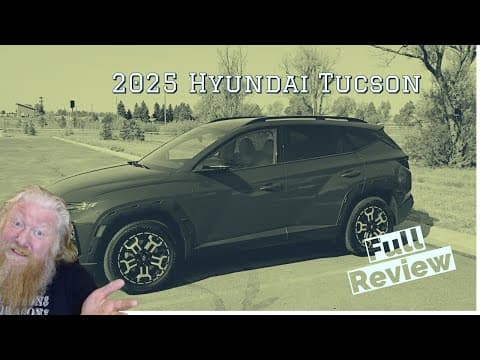
The 2025 Hyundai Tucson features significant updates including improved infotainment, engine options, and safety systems. While the standard engine is decent, the hybrid variant offers better performance and torque, making it a recommended choice despite a higher price point. The Tucson competes well in a crowded market against rivals like the Kia Sportage and Honda CR-V.
The 2025 Hyundai Tucson has arrived with notable updates that enhance its appeal in a competitive market. This review will delve into the key changes, engine options, infotainment system, safety features, and overall driving experience of the Tucson.
The Tucson received some styling updates this year, building on the foundation laid by its introduction in 2022. The design remains modern and attractive, making it a visually appealing choice for potential buyers.
One of the most significant changes in the 2025 Tucson is the revamped infotainment system. The new system is smoother, cleaner, and easier to use compared to previous models. While it may not be the best on the market, it strikes a good balance between functionality and user-friendliness, enhancing the overall driving experience.
The Tucson offers two engine options:
Standard Engine: The base model comes equipped with a 187 horsepower four-cylinder engine. While this engine is decent, it can struggle at times, particularly when accelerating. It tends to be noisy, especially at higher speeds, which may detract from the driving experience.
Hybrid Engine: For those looking for more power and better performance, the hybrid variant is the way to go. This option features a turbocharged engine paired with a hybrid setup, producing 226 horsepower. The hybrid's lower-end torque is particularly beneficial, providing better acceleration and a more enjoyable driving experience. The hybrid trims are marked by their efficiency and power delivery, making them a preferred choice for many drivers.
Fuel economy is an important consideration for many buyers. The standard gas engine offers reasonable efficiency, but the hybrid variant provides slightly better fuel economy. However, it's essential to note that the hybrid's primary advantage lies in its power delivery rather than just fuel efficiency.
The base price for the 2025 Hyundai Tucson starts at approximately $29,000. Transitioning to the hybrid model will set buyers back around $35,000. While this price increase may seem steep, it is relatively competitive given the current average price of vehicles in the market. The hybrid base model is priced similarly to the mid-tier non-hybrid model, making it a viable option for those seeking enhanced performance.
The Tucson faces stiff competition from several well-regarded vehicles in its class, including the Kia Sportage and the Honda CR-V. Both competitors offer strong features and performance, making it crucial for buyers to consider their options carefully. Despite the competition, the Tucson stands out with its stylish design and improved driving dynamics.
In summary, the 2025 Hyundai Tucson presents a compelling option for those in the market for a compact SUV. With its updated infotainment system, improved engine options, and strong safety features, it is a well-rounded vehicle. While the standard engine is adequate, opting for the hybrid variant is highly recommended for a more enjoyable driving experience. As the Tucson competes in a crowded segment, potential buyers should explore all available options, but the updates made by Hyundai this year make the Tucson a worthy contender.