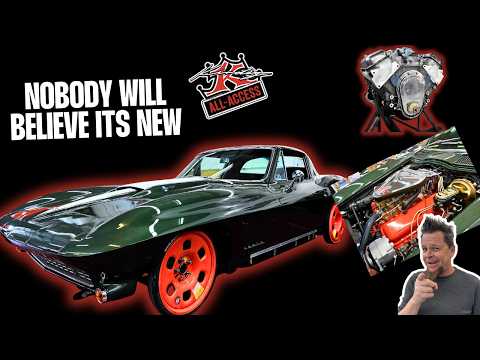
Discover the fascinating build of a 1967 Corvette that looks like a classic 427 but features a modern 555 cubic inch fuel-injected engine, custom stainless steel exhaust, and updated suspension with a front axle lift kit. The project balances period-correct aesthetics with modern performance and drivability, including detailed paintwork and advanced chassis components.
The 1967 Corvette is an iconic American muscle car, and this particular build is a fascinating blend of classic looks and modern performance. Although it appears to be a traditional 427 cubic inch engine Corvette with tri-power carburetors, it is actually equipped with a 555 cubic inch fuel-injected big block engine and numerous modern upgrades, all while maintaining a period-correct appearance.
This 1967 Corvette belongs to Brian, a longtime friend of the builders. It is a Bloomington Gold-winning car, originally a green-on-green four-speed 427 with 435 horsepower. The restoration is documented as perfect, but the goal of this build is not just to restore but to drive and enjoy the car with modern reliability and performance.
The builders emphasize the importance of making the car look factory-correct, with finishes and markings resembling the original 1967 model, while incorporating modern technology.
The Corvette is built on a Roadster Shop independent chassis with a FastTrack system. A notable upgrade is the installation of a Nitron front axle lift kit, similar to the Z-51 package on C8 Corvettes, allowing the front of the car to raise approximately 40 mm to clear steep driveways or curbs. This system uses electric-over-hydraulic pumps mounted at the rear, with hydraulic pistons in the front coilovers.
The suspension includes new shock assemblies and matching spring rates tuned for both front and rear, enhancing the car's handling and ride quality.
The car is painted in a solid red color known for excellent coverage. During the process, some cracks were found in the roof, which were repaired by removing damaged material, bodyworking, and applying UV primer. This primer is fast-curing and reliable, allowing for quick repairs without the need to repaint the entire car.
The paintwork is meticulous, aiming for a period-correct finish with visible zinc and copper finishes rather than smooth chrome, which is typical for custom builds. The pearl in the paint reflects light beautifully, shifting from bright highlights to copper tones, closely resembling the original color.
Working on a vintage-style build with modern components presents unique challenges:
The team is in the final stages of assembly, including installing the dashboard, steering column, and wheels (which are currently being polished and painted). They are eager to put the car on the ground and test its mobility.
Upon starting the engine, the car exhibits a strong lope and impressive oil and fuel pressure readings, indicating a healthy and powerful setup. The new suspension and big block engine promise an exhilarating driving experience.
The build team shares camaraderie and humor throughout the project. One member, Kyle, is recovering from a mountain biking accident but remains enthusiastic about the build. The team encourages safety gear for extreme sports and jokes about the challenges of working on vintage components compared to modern setups.
This Corvette build is a masterful blend of vintage aesthetics and modern engineering. By carefully balancing period-correct finishes with contemporary performance upgrades, the team has created a car that looks like a classic 1967 Corvette but drives with the power and reliability of a modern muscle car. The attention to detail in paint, bodywork, engine, and suspension makes this project a standout example of how to honor automotive heritage while embracing innovation.
The car is nearly ready for the road, promising to deliver thrilling performance and timeless style to its owner and admirers alike.