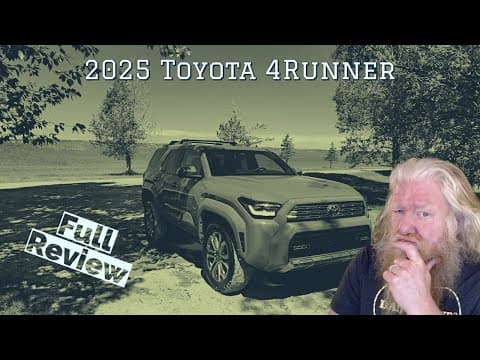
The 2025 Toyota 4Runner marks a significant redesign, transitioning to a turbocharged four-cylinder engine. This blog post explores the new powertrain options, performance, pricing, and off-road capabilities, highlighting the pros and cons of this sixth-generation SUV.
The 2025 Toyota 4Runner has undergone a complete redesign, marking the arrival of its sixth generation. This blog post delves into the significant changes, particularly the shift from a six-cylinder engine to a turbocharged four-cylinder, and what that means for performance, pricing, and overall driving experience.
One of the most notable changes in the 2025 Toyota 4Runner is the replacement of the traditional six-cylinder engine with a turbocharged four-cylinder engine. This transition raises concerns for many, as previous vehicles that made similar switches often struggled with performance issues. However, Toyota has made significant strides in turbocharging technology, resulting in a more refined driving experience.
The base model of the 4Runner features a turbocharged 2.4L engine paired with an 8-speed automatic transmission, delivering 278 horsepower. This setup effectively mitigates turbo lag, although some users may still notice delays when towing or off-roading. For those seeking enhanced performance, the I Force Max engine is available on the Platinum, TRD Pro, and Trail Hunter models. This mild hybrid system improves power delivery and fuel efficiency, providing a more predictable power curve compared to the standard turbocharged engine.
While the new engine options are promising, the 4Runner retains its truck-based design, which affects its maneuverability and fuel efficiency. Drivers may find it less agile compared to crossover SUVs of similar size. Additionally, the high seating position can make entry and exit challenging for some passengers.
The 4Runner is known for its off-road prowess, and the new models continue this tradition. The TRD Pro and Trail Hunter variants are particularly well-equipped for off-road adventures, with features tailored for different terrains. The TRD Pro is designed for varied landscapes, while the Trail Hunter focuses on forest trails and rugged environments.
The pricing for the 2025 Toyota 4Runner starts at approximately $43,000 for the base model. The TRD Off-Road variant begins at around $51,000, while the Limited model is priced at about $60,000. The TRD Pro and Trail Hunter models are priced similarly, starting around $69,000, with additional options pushing the price higher.
The 2025 model introduces a third-row seating option, but it is important to note that this feature is not particularly practical. The third row is best suited for emergency use, as it may not accommodate standard child safety seats comfortably. Families looking for a more spacious option may find the Toyota Highlander to be a better choice.
Overall, the 2025 Toyota 4Runner presents a positive evolution in its design and performance. The transition to a turbocharged four-cylinder engine has not detracted from its appeal, and the vehicle remains a strong contender in the SUV market. For those interested in off-road capabilities, the TRD Pro and Trail Hunter models offer excellent options. However, potential buyers should carefully consider their needs, especially regarding the practicality of the third-row seating and the vehicle's fuel efficiency.
In summary, the 2025 Toyota 4Runner is a well-rounded SUV that balances modern technology with traditional ruggedness, making it a compelling choice for both off-road enthusiasts and everyday drivers alike.