Bitcoin recently fell below $60,000, a level unseen in two years, coinciding with unusual market behavior in BlackRock, the world's largest asset manager. This correlation suggests both are reacting to broader global economic issues such as private credit stress, liquidity shortages, and shifting credit cycles, rather than isolated asset-specific factors. The Hang Seng index's decline further supports a global recessionary trend, highlighting the importance of understanding these interconnected,
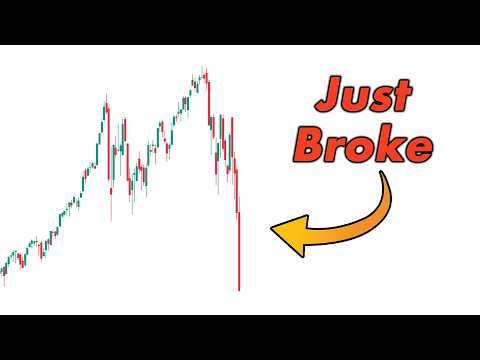
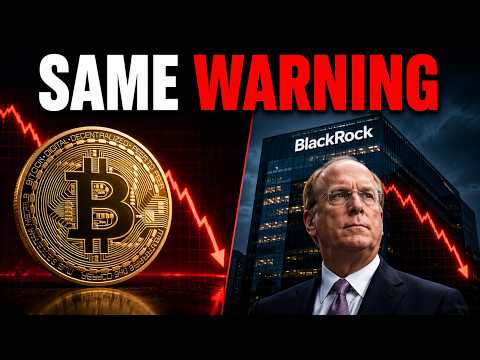
Bitcoin recently broke down again, falling below $60,000 to a price level not seen in roughly two years. However, this decline does not appear to be solely a Bitcoin story. When examining the chart of BlackRock, the world's largest asset manager and a major institutional player on Wall Street, an unusual and unexpected correlation emerges. Bitcoin and BlackRock are not just tracking each other; their price movements suggest a shared warning signal rather than a random coincidence.
On the surface, many attribute Bitcoin's selloff to crypto liquidations, leverage issues, ETF flows, and fading momentum. For BlackRock, the decline might be seen as part of asset management cyclicality or risk market pressures. However, zooming out reveals a more complex picture involving private credit stress, shadow banking pressures, falling bond yields, and a significant drop in a key Eurodollar global risk indicator.
This suggests that neither Bitcoin nor BlackRock is leading the other; instead, both are responding to larger, global economic forces.
Steve and Jeeoff discuss how Bitcoin's price action serves as a market signal reflecting perceptions of risk and liquidity. Despite consumers spending tax refunds, price pressures remain high, and savings rates are at rock-bottom levels. This scenario indicates a slowing economy and a lack of liquidity.
Bitcoin and gold, as stores of value, become assets that households might sell when facing financial stress. Bitcoin, being a volatile risk asset, is easier to sell compared to other assets like AI stocks. The drying up of risk money at the extreme edges of the market, where Bitcoin resides, signals growing risk aversion.
As markets approach the late cycle, investors tend to concentrate money into fewer assets perceived as winners. Bitcoin and many cryptocurrencies have lost momentum and public interest, with attention shifting to sectors like AI stocks. This behavior aligns with typical late-stage market dynamics.
A significant part of the unusual correlation involves private credit and BlackRock's exposure to it. There has been a slow-motion shadow bank run on funds managed by alternative asset managers like BlackRock. Notably, redemptions are coming primarily from offshore institutional investors rather than wealthy Americans, signaling a broader, international concern.
These offshore institutions are sensitive to the credit cycle and are pulling money out of private credit funds, reflecting worries about the US economy's strength and resilience.
The global economy recently experienced a massive energy shock, slowing trade, especially in oil. This has led to a dollar shortage, prompting foreign institutions to seek dollars wherever possible, including private credit funds. The repeated redemption requests from these institutions indicate a growing concern about future liquidity and economic conditions.
The current situation bears some resemblance to the mortgage bubble preceding the 2008 financial crisis. Private credit funds offer seemingly low-risk, high-return opportunities, but hidden leverage and complex structures pose significant risks.
Institutions operating offshore subsidiaries hold much of this leverage, often hidden from public balance sheets. As economic conditions worsen, the risk of losses and defaults increases, prompting investors to withdraw funds while they still can.
Funds like Apollo have become cash flow negative due to more redemption requests than inflows. Even with gating mechanisms limiting withdrawals, these funds face liquidity pressures, potentially leading to forced asset sales and further market stress.
In contrast, Bitcoin offers liquidity without gating, making it an easier asset to sell during times of stress, which may explain part of its price decline.
The Hang Seng Index in Hong Kong serves as a reliable Eurodollar system indicator due to Hong Kong's role as a money center connecting China, Asia, and the broader global financial system.
When the Eurodollar system is healthy, money flows into Hong Kong and China, boosting the Hang Seng Index as a reflationary signal. Conversely, a declining Hang Seng Index indicates risk aversion and economic downturns in the region.
Currently, the Hang Seng Index's downturn, alongside Bitcoin and BlackRock's declines, points to a global shift from reflationary to recessionary conditions.
The combined signals from Bitcoin, BlackRock, and the Hang Seng Index suggest a nine-month trend of deteriorating liquidity and economic prospects. The US economy shows signs of weakness in income and spending data, contradicting mainstream narratives of strength and resilience.
As private credit dries up, small businesses reliant on alternative lending face challenges in maintaining operations, potentially leading to layoffs and business closures. This credit tightening is a dangerous economic development that could trigger broader downturns.
The unusual correlation between Bitcoin and BlackRock is not coincidental but reflects deeper, global economic concerns involving liquidity shortages, private credit stress, and shifting credit cycles. The inclusion of the Hang Seng Index in this analysis underscores the global nature of these challenges.
Investors and portfolio managers should pay close attention to these interconnected signals to understand the evolving economic landscape and adjust strategies accordingly.
For those interested in a deeper dive into these market dynamics and how to incorporate them into an all-weather investing strategy, upcoming webinars and detailed analyses are recommended to stay informed and prepared.