The silver market is experiencing unprecedented activity with over 35 million ounces demanded on the first day of July delivery, primarily supplied by just two banks, Scotia Bank and HSBC. This surge highlights ongoing market manipulations, looming banking crises, and the importance of holding physical silver. The article also touches on the broader economic implications and upcoming events related to silver and the financial system.
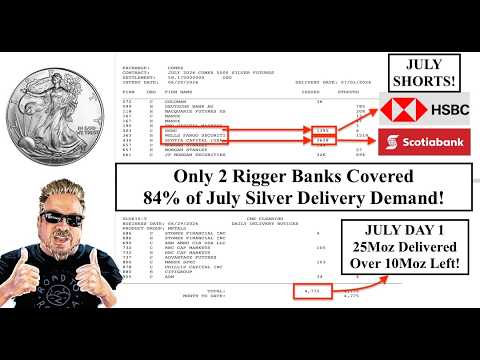
Exciting and turbulent times are unfolding in the silver market. On the very first day of July's delivery month, a staggering 35 million ounces of silver were demanded, with more expected to come. Remarkably, only two banks—Scotia Bank and HSBC—have delivered 84% of this silver, signaling significant shifts and pressures within the market.
Before diving into the silver market details, there is an upcoming event worth mentioning. On Thursday, from 6:00 to 8:00 PM, there will be a musical gathering at Brooks Note Winery in Petaluma, California. The event will feature songs about America, including classics like "Pink Houses," "Wagon Wheel," "American Pie," and originals celebrating the United States. The winery is notable for producing Pinot Noir from a family vineyard, and attendees are encouraged to support by purchasing some of their unique wines.
This event also coincides with a birthday celebration on July 4th, marking the 250th anniversary of the United States. The spirit of resilience and hope is strong, with a belief that despite dark times, the country will recover and thrive.
The silver market has been heavily manipulated, with prices controlled through computers and derivatives. Starting from the end of September last year, the price was artificially driven from $50 to $120 before being slammed down again. This manipulation is coordinated and deliberate.
Currently, silver prices remain below the 200-day moving average, which is around $68. Technical analysis suggests a critical point around July 22nd, where prices may rise above this average, potentially signaling a market shift.
Given the market's volatility and manipulation, it is advised to acquire physical silver rather than mining stocks or ETFs. Physical possession ensures security against market rigging. Pre-1965 coinage is particularly recommended due to its difficulty to counterfeit and its recognized silver content of 90%, despite not being 999 fine.
Andy Sheckman is noted as a reliable source for pre-1965 coinage, reportedly selling at or below spot price. Interested buyers can contact via email at info@mfranklin.com for pricing and availability.
The standing for delivery in July is approximately 37 million ounces, with expectations to exceed 50 million ounces, making it the largest delivery month of the year. Already, about 24 million ounces have been stood for delivery on the first day.
JP Morgan Chase, once a dominant player, is now largely out of the silver business, having leased much of their silver to Bank of America, which subleases it to other banks.
The silver market rigging involves complex leasing and subleasing of silver among major banks. JP Morgan Chase was fined $920 million for rigging but still profited over a billion dollars from precious metals trading. The current delivery pressures reflect the unwinding of these manipulations.
A critical aspect of the silver market is the distinction between registered and eligible silver in warehouses. Registered silver is available for delivery, while eligible silver is not necessarily so.
Recently, 4.5 million ounces were transferred from registered to eligible, indicating that much of the registered silver (about 87 million ounces) is not actually available for delivery. This amount is nearly equal to the silver held in the SLV ETF by JP Morgan Chase.
This scarcity of deliverable silver adds to the market tension and supports the case for holding physical silver.
The US Mint has reduced transparency by changing silver eagle sales reports from daily to weekly, and now monthly updates. This reduction in reporting frequency raises concerns about government handling of silver supply and demand.
Silver eagle production is at its lowest in recent months, despite legal requirements to meet public demand. Allocation limits restrict how much silver eagles individuals can purchase, which some argue is illegal.
The current financial system is under strain, with fears of a banking collapse looming around 2026. The potential failure of major banks like JP Morgan Chase could trigger widespread financial turmoil, affecting markets, brokerage houses, and retirement accounts.
In this environment, alternative assets like physical silver and cryptocurrencies are seen as vital for preserving wealth.
Artificial Intelligence (AI) is highlighted as a significant future force, with Theta Fuel (a cryptocurrency) positioned as a major beneficiary. Theta's decentralized data centers and edge nodes could revolutionize AI infrastructure, especially if traditional banks collapse.
Manufacturers like Samsung, Sony, Tesla, Apple, and IBM may integrate Theta Edge nodes into devices, enabling users to run their own nodes and potentially earn income, contributing to a universal basic income model.
The silver market is at a critical juncture, with record delivery demands exposing the fragility and manipulation within the system. Physical silver remains a crucial asset for individuals seeking security amid financial uncertainty.
The broader economic landscape suggests significant upheaval ahead, with banking crises and technological shifts reshaping the future.
For those interested, the upcoming event at Brooks Note Winery offers a chance to connect and celebrate resilience and hope.
Stay informed, secure your assets, and prepare for the changes ahead.
My silver now. Here we go again. My silver now. My silver now. That's a silver baby.