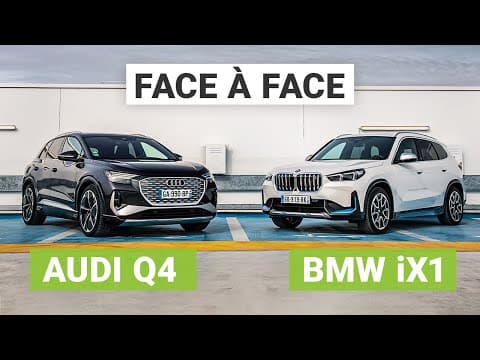
This blog post provides a detailed comparison between the BMW iX1 and Audi Q4, focusing on their specifications, interior features, driving experience, and pricing, highlighting the strengths and weaknesses of each electric SUV.
In this blog post, we will delve into a comprehensive comparison between two prominent electric SUVs: the BMW iX1 and the Audi Q4 e-tron. Both vehicles represent the pinnacle of luxury in the compact electric SUV segment, but they come with distinct features and specifications that cater to different preferences.
The BMW iX1 and Audi Q4 e-tron are both 100% electric compact SUVs. The Audi measures 4.59 meters in length, 1.87 meters in width, and 1.63 meters in height, while the BMW is slightly shorter at 4.50 meters long, 1.85 meters wide, and 1.62 meters high.
Both models are equipped with dual motors, providing all-wheel drive capabilities. The Audi Q4 features two synchronous permanent motors that deliver 299 horsepower and 472 Nm of torque. In contrast, the BMW iX1 utilizes two wound rotor synchronous motors, producing 313 horsepower and 494 Nm of torque.
The battery specifications also differ: the BMW iX1 is powered by a 64.7 kWh lithium-ion battery, while the Audi Q4 boasts a larger 76.16 kWh battery.
The Audi Q4, presented in the high-end S line trim, includes luxurious features such as:
The interior is modern and functional, with high-quality materials and a well-designed dashboard. The Q4 offers a spacious cabin with leather upholstery (optional), a three-zone climate control system (available for €810), and a 10.25-inch multimedia screen that supports Apple CarPlay and Android Auto.
The BMW iX1, in the Xline trim, features:
The interior is equally impressive, with a focus on quality materials and a well-structured dashboard. The iX1 includes advanced seating options and a multimedia system that, while slightly less intuitive than Audi's, offers good graphics and functionality.
Both SUVs come with powered tailgates for convenience. The Audi Q4 offers a cargo volume of 520 liters, while the BMW iX1 provides 490 liters. However, when the rear seats are folded down, both vehicles offer similar maximum cargo capacities of approximately 1490 liters.
The BMW iX1 is noted for its agile handling and responsive steering. It features adaptive suspension that enhances comfort and performance, especially at lower speeds. The driving experience is enhanced by a 360-degree camera system and a heads-up display, making it easy to navigate tight spaces.
The Audi Q4, while slightly heavier, offers a comfortable ride with a well-calibrated steering system. The driving position is more elevated, providing better visibility. The Q4 also features a drive select system that allows drivers to adjust the vehicle's performance settings.
Both vehicles perform well in terms of acceleration and efficiency. The BMW iX1 can achieve 0 to 100 km/h in approximately 5.6 seconds, while the Audi Q4 takes around 6 seconds. In terms of range, the Audi Q4 offers a slightly better performance with an estimated range of 434 km, compared to the BMW's 380 km under mixed driving conditions.
Charging times are comparable, with both vehicles capable of rapid charging. The BMW iX1 supports charging at 130 kW, while the Audi Q4 can charge at 135 kW. Both models can reach 80% charge in about 30 minutes at a fast-charging station.
The pricing for these luxury SUVs reflects their features and capabilities:
This results in a price difference of approximately €8,850 in favor of the BMW iX1, making it a more economical choice without significantly compromising on features.
In conclusion, both the BMW iX1 and Audi Q4 offer compelling features and performance in the luxury electric SUV market. The Audi Q4 excels in interior space and technology, while the BMW iX1 stands out for its agility and driving dynamics. Ultimately, the choice between these two models will depend on individual preferences regarding design, comfort, and budget.