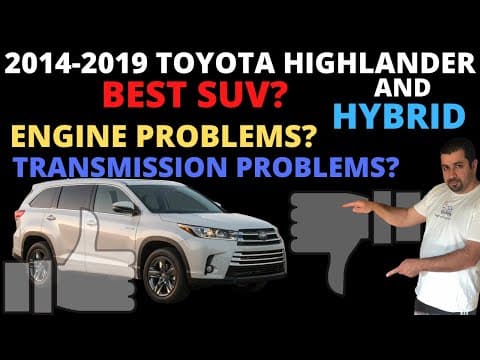
This guide covers essential information for potential buyers and current owners of the 2014-2019 Toyota Highlander and Highlander Hybrid, including common engine problems, transmission issues, body concerns, and maintenance tips to ensure a smooth ownership experience.
Welcome to this detailed guide on the 2014-2019 Toyota Highlander and Highlander Hybrid. This article will cover common problems, things to look for when buying, and essential maintenance tips for current owners.
The 2014-2019 Toyota Highlander comes with three engine options:
The hybrid model shares similar engine issues with the standard models.
One of the most notorious problems across all engine types is oil leaks. The most common leak originates from the front timing cover, which requires dropping the entire engine for repairs. This issue is prevalent even in relatively new vehicles.
When considering a purchase, inspect the engine area for oil leaks. The area should be dry; if it is wet with oil, either negotiate the price or ensure any warranty covers the repair. If you currently own a Highlander, check for leaks immediately, especially if it's under warranty.
From 2014 to 2019, coolant leaks from the water pump have also been reported. Symptoms include:
The four-cylinder engine is generally underpowered for this size SUV, leading to complaints about oil consumption and performance. It is advisable to opt for the V6 engine for better performance and reliability.
These models feature start-stop technology, which can lead to concerns about starter longevity. Toyota estimates the starter's lifespan at approximately 382,000 starts, which translates to about ten years. Ensure to use the original battery to avoid complications.
The 2017 model year experienced significant transmission problems, including harsh shifting and whining noises. However, Toyota addressed these issues with software updates and physical modifications by mid-2018. If purchasing a 2017-early 2018 model, ensure that the transmission has been updated or consider opting for a late 2018 or 2019 model.
Some eight-speed transmissions may develop leaks due to cracks in the plastic oil pan. This can be an expensive repair, so inspect for any signs of leakage.
The Highlander is known for radio issues, including rebooting and connectivity problems. Ensure to test the radio and Bluetooth functionality before purchasing. The hands-free microphone quality is also often criticized.
The Highlander Hybrid is generally reliable, with few reported issues. Maintenance is slightly more involved, requiring attention to the fan filter and hybrid coolant system. Be cautious of water spills near the high-voltage battery located under the back seat, as this can lead to severe damage.
For potential buyers, the best years to consider are:
In summary, if you are considering purchasing a 2014-2019 Toyota Highlander, pay close attention to oil leaks, transmission issues, and electrical problems. Ensure thorough inspections and consider the model year carefully to avoid common pitfalls. With proper maintenance, the Highlander can be a dependable and enjoyable vehicle.