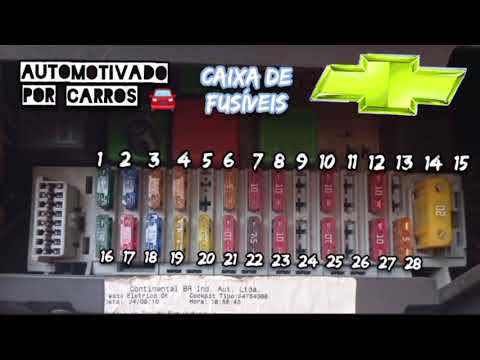
In this article, we will explore the fuse box of the 2011 Chevrolet Prisma, a popular model known for its reliability and efficiency. Understanding the fuse box is crucial for troubleshooting electrical issues and ensuring the proper functioning of various vehicle systems.
Overview of the 2011 Chevrolet Prisma
The Chevrolet Prisma is a compact car that has gained popularity for its practicality and performance. The model we will discuss today is from 2010, designated as a 2011 model, and has clocked nearly 168,000 kilometers.
Accessing the Fuse Box
To access the fuse box, you need to carefully pull it out from its housing. It is designed for easy removal, allowing you to work on it without hassle. Make sure to handle it gently to avoid breaking any clips or tabs.
Internal Fuse Box
The internal fuse box is located inside the vehicle and contains several fuses that control various electrical components. Below is a breakdown of each fuse and its function:
- Fuse 1 (30A) - Rear window defroster
- Fuse 2 (15A) - Audio system, passenger compartment lighting, trunk lighting
- Fuse 3 (5A) - Battery supply, instrument panel, immobilizer system
- Fuse 4 (5A) - Ignition switch supply, instrument panel, immobilizer, relay coil for the air conditioning compressor
- Fuse 5 - Not utilized
- Fuse 6 - Ignition switch supply, rear window defroster relay, internal ventilation with air conditioning, internal ventilation switch lighting
- Fuse 7 (10A) - Horn, hazard warning lights, cold start reservoir pump
- Fuse 8 (10A) - Left parking lights, audio system lighting, instrument panel lighting
- Fuse 9 (20A) - Comfort module, front door windows, and electric locks
- Fuse 10 (10A) - Left high beam
- Fuse 11 (20A) - Comfort module for front door windows and electric locks
- Fuse 12 (10A) - Left low beam
- Fuse 13 (20A) - Comfort module alarm
- Fuse 14 (20A) - Max fuse for internal ventilation without air conditioning
- Fuse 15 - Max fuse, not installed in this model
- Fuse 16 (30A) - Windshield wiper and washer
- Fuse 17 (10A) - Ignition switch supply, turn signal lights, speed sensor, audio system
- Fuse 18 (15A) - Accessory socket
- Fuse 19 (15A) - Ignition switch supply circuits, fuel injection system, ignition coil, fuel pump relay
- Fuse 20 (10A) - Ignition switch supply, cold start relay, cold start solenoid valve, heated oxygen sensor
- Fuse 21 (10A) - Brake light, reverse light
- Fuse 22 (7.5A) - Ignition switch supply, ECM
- Fuse 23 (10A) - Right parking lights, license plate light
- Fuse 24 (20A) - Comfort module for front door windows and electric locks
- Fuse 25 (10A) - Right high beam
- Fuse 26 (15A) - Air conditioning compressor (not applicable for this model)
- Fuse 27 (10A) - Right low beam
- Fuse 28 (5A) - Fan relay coil power supply
It is important to note that some fuses may not be present in every vehicle, depending on the installed options and features.
Engine Compartment Fuse Box
Next, we will look at the fuse box located in the engine compartment. This box is smaller and contains fewer fuses. Here’s what you need to know:
- Fuse 1 (20A) - Diagnostic system, engine management, fuel pump
- Fuse 2 (30A) - Lighting system, audio system, immobilizer
- Fuse 3 (30A) - Radiator fan (this vehicle does not have air conditioning)
- Fuse 4 (30A) - Rear window defroster, horn, emergency signaling, cold start system
- Fuse 5 (60A) - Ignition switch supply circuit
Conclusion
In summary, understanding the fuse box of the 2011 Chevrolet Prisma is essential for maintaining the vehicle's electrical systems. This guide provides a comprehensive overview of the internal and engine compartment fuse boxes, detailing the function of each fuse. If you encounter any electrical issues, refer to this guide to identify and replace the necessary fuses.
Thank you for reading, and we hope this information helps you resolve any issues with your Chevrolet Prisma. If you found this guide useful, consider sharing it with fellow Prisma owners.