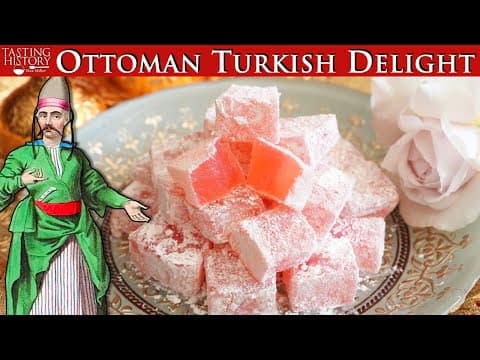
This blog post explores the origins and recipe of Turkish Delight, a beloved confection with a rich history dating back to the Ottoman Empire. It details the traditional preparation method, ingredients, and variations, while also connecting its cultural significance to literature and history.
Turkish Delight, known as Rahat-ul Hulkum in its original form, has captivated many, including characters in literature like Edmund from C.S. Lewis's The Lion, The Witch, and The Wardrobe. This blog post delves into the origins, preparation, and cultural significance of this delightful confection.
As a child, the first encounter many have with Turkish Delight is through stories, particularly in The Lion, The Witch, and The Wardrobe. In this tale, the character Edmund is enchanted by the Queen's offering of Turkish Delight, a treat that symbolizes temptation and betrayal. The context of the story, set during World War II when sugar was scarce, adds to the allure of this sweet delicacy.
To truly understand Turkish Delight, one must look back to its roots in the Ottoman Empire. The earliest known recipe dates back to 1844, documented by Mehmet Kamil in one of the first Ottoman cookbooks. The original dish was not called Turkish Delight but rather Rahat-ul Hulkum, which translates to "soothing to the throat." This suggests that it may have originated as a medicinal concoction before evolving into a popular sweet served at the Sultan's court.
The original recipe is extensive, calling for large quantities of sugar and other ingredients. Here’s a simplified version for modern cooks:
Musk, traditionally derived from the musk deer, was used in the original recipes. Today, culinary musk is rare and often comes in liquid form. It adds a unique flavor reminiscent of clean laundry, but if unavailable, other flavorings like almond or orange blossom water can be used.
Prepare the Sugar Syrup: In a large pot, whisk the citric acid into the sugar, then add 1.5 cups of water. Stir until dissolved. Attach a candy thermometer and heat the mixture over medium heat until it reaches 250°F (122°C).
Make the Starch Slurry: In a separate bowl, whisk the starch into the quart of water until smooth. Once the sugar syrup reaches the desired temperature, slowly add the starch mixture while whisking continuously.
Cook the Mixture: Return the pot to low heat and stir constantly for about 1.5 to 2 hours. The mixture will thicken and change color, eventually becoming a gelatinous consistency.
Add Flavorings: Once the mixture has thickened, remove it from heat and stir in the rose water, musk, and any food coloring if desired.
Set the Turkish Delight: Pour the mixture into a greased dish (using almond oil or any neutral oil) and let it cool completely, preferably overnight.
Cut and Coat: Once set, cut the Turkish Delight into pieces and toss them in a mixture of powdered sugar and starch to prevent sticking.
Turkish Delight has a rich history intertwined with the culture of the Ottoman Empire. Its origins are somewhat mysterious, with theories suggesting it evolved from medicinal concoctions or simple starch puddings. By the 18th century, it became a specialty of the palace, with recipes kept secret until they were eventually published.
One notable figure in the history of Turkish Delight is Hadji Bekir Effendi, a confectioner who opened a shop in Istanbul in 1777. His contributions to the dessert helped popularize it, leading to the various forms we see today.
Turkish Delight is more than just a sweet treat; it is a symbol of cultural heritage and history. From its mysterious origins to its place in literature, this confection continues to enchant people around the world. Whether you enjoy it as a nostalgic treat or a culinary adventure, making Turkish Delight at home allows you to connect with a rich tradition that spans centuries.