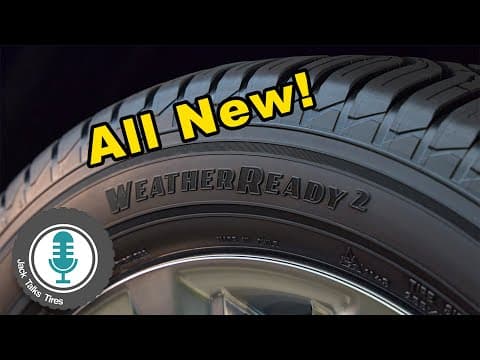
This blog post compares the Goodyear WeatherReady 2 and Michelin CrossClimate 2 tires, highlighting their performance, features, and differences. The WeatherReady 2 has advantages such as Comfort Flex technology, evolving traction grooves, and a built-in wear gauge, making it a strong contender in the all-weather tire market.
When it comes to all-weather tires, the Goodyear WeatherReady 2 and Michelin CrossClimate 2 are two of the most talked-about options on the market. At first glance, they may appear similar, but a closer look reveals that the WeatherReady 2 has several features that give it a slight edge over its Michelin counterpart. In this post, we will explore the performance, technology, and unique features of both tires based on a recent test drive and comparison.
Both the Goodyear WeatherReady 2 and Michelin CrossClimate 2 are designed to perform well in various weather conditions, including rain and light snow. They are both classified as all-weather tires, which means they can handle a range of driving conditions while providing a comfortable ride.
To evaluate these tires, we were invited to Goodyear's headquarters in Akron, Ohio, where we had the opportunity to test drive both tires on a specially designed track. The track simulated road conditions typical after a heavy rain, allowing us to push both tires to their limits on both dry and wet segments. We also assessed their braking performance.
During the tests, both tires performed admirably, showing minimal hydroplaning. This indicates that both the WeatherReady 2 and CrossClimate 2 are effective at evacuating water from their treads, a crucial feature for safety in wet conditions. However, the close performance of both tires left us with the impression that they are closely matched in this regard.
One area where the WeatherReady 2 stood out was in noise reduction. On a test track designed to simulate rough pavement, the WeatherReady 2 was noticeably quieter than the CrossClimate 2. Goodyear attributes this to their Comfort Flex technology, which is integrated into the sidewall of the tire. This technology is designed to reduce bumps and vibrations, resulting in a quieter ride.
While both tires are similar in many respects, the WeatherReady 2 has three key features that set it apart:
One of the challenges with tire performance is how it diminishes as the tread wears down. Goodyear's evolving traction grooves address this issue by allowing the grooves in the tread to transition from narrow to wide as the tire wears. This design helps maintain effective water evacuation throughout the tire's lifespan. In contrast, the CrossClimate 2 features full-depth sipes but lacks the ability to widen grooves over time, which may affect its performance as it wears.
Another innovative feature of the WeatherReady 2 is its built-in wear gauge. This allows drivers to easily check the tread depth at a glance, eliminating the need for a separate tire gauge. While this may not be a life-changing feature, it provides a small but useful benefit, especially when comparing closely matched tires.
In terms of warranty, both tires offer a 60,000-mile warranty in the U.S. However, for Canadian customers, the CrossClimate 2 comes with a 100,000-kilometer warranty, while the WeatherReady 2 offers a slightly lower warranty of 95,000 kilometers. This difference may influence purchasing decisions for consumers in Canada.
Pricing is another factor to consider when choosing between these two tires. Generally, the Michelin CrossClimate 2 tends to be priced higher than the Goodyear WeatherReady 2. This price difference may be a significant consideration for budget-conscious consumers.
In conclusion, both the Goodyear WeatherReady 2 and Michelin CrossClimate 2 are excellent all-weather tires that perform well in various conditions. They both handle dry and wet roads effectively and are certified for winter conditions, as indicated by the three-peak mountain snowflake symbol on their sidewalls. However, the WeatherReady 2's Comfort Flex technology, evolving traction grooves, and built-in wear gauge provide it with a slight advantage in certain areas. Ultimately, the choice between these two tires will depend on individual preferences, driving conditions, and budget considerations. Regardless of your choice, both tires are reliable options for all-weather performance.