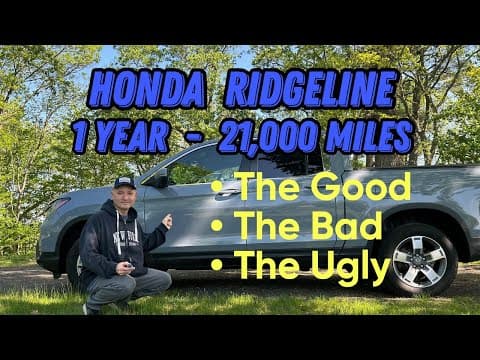
This comprehensive one-year review of the Honda Ridgeline covers its excellent ride quality, fuel efficiency, and functionality, while also addressing concerns about towing capacity, braking issues, and overly sensitive collision mitigation systems.
In this blog post, we will explore a one-year update on the Honda Ridgeline after driving it for over 21,000 miles. This review will be divided into three sections: the good, the bad, and the ugly. Let's dive in.
The Honda Ridgeline excels in ride quality, offering a smooth and comfortable experience. Compared to full-size trucks like the Chevy Silverado and Toyota Tundra, the Ridgeline stands out with its superior handling and comfort. It absorbs bumps well and provides a pleasant driving experience, making it a top choice for those who prioritize comfort.
Fuel mileage is another strong point for the Ridgeline. The truck averages about 22 miles per gallon in combined city and highway driving, which is impressive for a vehicle in its class. On longer highway trips, the fuel efficiency can reach up to 26 miles per gallon. This is a significant improvement compared to the 14-15 miles per gallon experienced with previous full-size trucks.
The functionality of the Honda Ridgeline is noteworthy. The truck features a unique tailgate that swings open, allowing for easier loading and unloading. Additionally, the underbed storage trunk is a brilliant design that enhances the truck's usability. While some may criticize the shallow bed depth, the underbed storage compensates for this limitation. The bed liner is durable and scratch-resistant, making it suitable for hauling heavy materials without worry.
The styling of the Ridgeline is subjective, but many find it appealing. Although some may prefer a more rugged look, the overall design is modern and attractive. The value offered by the Ridgeline, especially in the RTL trim, is hard to beat in the midsize truck market. It comes equipped with leather seats, power features, and a moonroof, providing a premium feel without breaking the bank.
One of the downsides of the Honda Ridgeline is its towing capacity, which is rated at 5,000 pounds. This is lower than many competitors in the midsize truck segment, such as the Chevy Colorado and Toyota Tacoma, which can tow closer to 7,000 pounds. For those who need a truck primarily for towing, this could be a significant drawback.
Initially, the braking performance seemed adequate, but after 20,000 miles, issues began to surface. A pulsating brake sensation was noted, leading to concerns about the quality of the rotors. Although the dealer claimed the rotors were not warped, there is suspicion that they may be softer than expected. Future brake jobs may require aftermarket parts for better performance.
Another concern is the windshield quality. After experiencing a chip that required repair, it raises questions about the durability of the glass. While it may have been a freak accident, reports from other Ridgeline owners suggest that windshield chips are not uncommon.
The wireless Apple CarPlay feature is a mixed bag. While it works well when functioning properly, there have been instances where it malfunctioned, causing frustration. Additionally, the wireless charging feature tends to overheat the phone, leading to slow charging and potential shutdowns. Improvements could be made in this area for a better user experience.
The most significant complaint about the Honda Ridgeline is its overly sensitive collision mitigation system. Many drivers have reported that it triggers unnecessarily, applying the brakes even when there is no immediate danger. This can lead to abrupt stops that could cause accidents if not handled carefully. The confusing settings for sensitivity only add to the frustration, as drivers may inadvertently switch to a more sensitive mode.
Despite the few drawbacks, the Honda Ridgeline remains a strong contender in the midsize truck market. The ride quality, fuel efficiency, and innovative features make it a compelling choice for many drivers. While the towing capacity and braking issues are notable concerns, they may not be deal-breakers for everyone. Overall, if given the chance to purchase again, the Ridgeline would still be a top choice, especially with hopes for improvements in future models.
Thank you for reading this one-year review of the Honda Ridgeline. If you have any questions or comments, feel free to share them below.