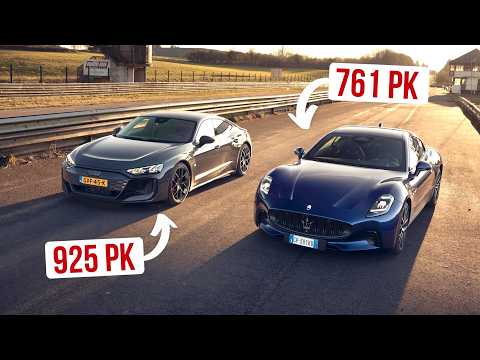
This blog post compares the Maserati GT Volgoraire and the Audi E-Tron GT RS Performance, focusing on their performance, design, and driving experience as electric Grand Tourers. While the Audi excels in technology and comfort, the Maserati offers a more engaging driving experience and retains the essence of a classic GT.
In the world of luxury electric vehicles, two names stand out: the Maserati GT Volgoraire and the Audi E-Tron GT RS Performance. Both vehicles carry the prestigious GT designation, promising high-speed performance and luxurious interiors. But how do they stack up against each other? Let's dive into the details.
The roots of these vehicles can be traced back to the historic street circuit of Chimé, which opened in 1926. This circuit was known for its high-speed races, with speeds reaching between 200 and 300 km/h. Today, both the Maserati and Audi are electric versions of the classic Grand Tourer, designed for long-distance travel at high speeds, albeit with modern electric technology.
The Maserati features three motors—two on the rear axle and one on the front—allowing for impressive torque factoring. The design remains true to Maserati's heritage, with a sleek exterior that doesn't immediately reveal its electric nature.
The Audi, on the other hand, boasts a more powerful engine and a larger battery, allowing for a longer range and faster charging. Its design is equally striking, with a low nose and aggressive styling that commands attention.
The Maserati offers a more traditional driving experience, reminiscent of combustion engine vehicles. The power delivery is gradual, providing a sense of connection with the road. The car's weight distribution and handling allow for a more engaging drive, with the ability to steer using the throttle. The Maserati's adaptive air suspension, while comfortable, does not match the Audi's level of sophistication.
In contrast, the Audi delivers an explosive driving experience. The launch control feature allows for rapid acceleration, pushing the driver back into their seat. The car's advanced suspension system, which adjusts the pressure in the dampers, ensures a smooth ride, even at high speeds. However, some drivers may find the steering feedback less engaging compared to the Maserati.
Inside, the Maserati maintains a luxurious feel, though it lacks some of the high-tech features found in the Audi. The cabin is designed to evoke the classic GT experience, with a focus on driver engagement rather than pure technology. However, the interior materials and some controls may not meet the expectations for a vehicle in this price range.
The Audi excels in interior quality, featuring a modern design with a plethora of technology. The multimedia system is user-friendly, and the overall build quality is impeccable. The comfort level is high, with ample space for passengers, making it a more practical choice for long journeys.
When it comes to practicality, the Audi takes the lead with a larger trunk space of 350 liters compared to the Maserati's 270 liters. Additionally, the Audi's range and charging capabilities make it a more suitable option for long-distance travel, while the Maserati may require more frequent charging stops.
Both the Maserati GT Volgoraire and the Audi E-Tron GT RS Performance are remarkable electric Grand Tourers, each with its unique strengths. The Audi impresses with its technology, comfort, and performance, making it a strong contender in the electric vehicle market. However, the Maserati offers a more engaging driving experience that pays homage to its heritage as a classic GT manufacturer.
Ultimately, the choice between these two vehicles may come down to personal preference: whether one values cutting-edge technology and comfort or a more traditional and spirited driving experience. For those who appreciate the essence of a Grand Tourer, the Maserati may just have the edge, while the Audi stands as a testament to modern electric performance.