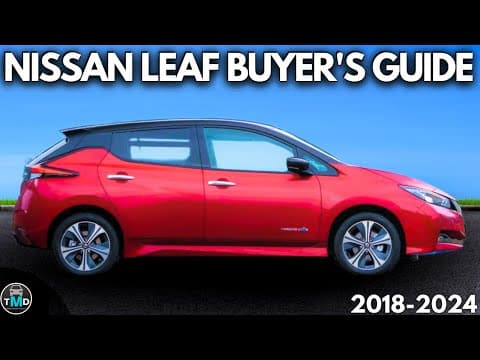
This comprehensive guide explores the Nissan LEAF, its history, reliability, safety ratings, common faults, battery options, and considerations for potential buyers from 2018 to 2024, providing essential insights for anyone looking to purchase this electric vehicle.
Nissan introduced the LEAF back in 2010, quickly becoming the world’s best-selling all-electric vehicle until the Tesla Model 3 took the title in 2020. Despite this shift, the LEAF continues to hold a strong position in the market, particularly in the private sector, making it a competitive option for buyers, especially in the used car market.
The LEAF has been a staple in the electric vehicle (EV) market for over a decade, with two generations of models. The second generation has been in production since October 2017 and is manufactured in Japan, the USA, and the UK. This global production strategy ensures that vehicles are delivered to their respective regions, with U.S. and Canadian buyers typically receiving U.S.-built cars, while European and Australian buyers often get models from the UK.
By 2018, when the second-generation LEAF was launched, competition in the electric vehicle market had intensified. Despite this, the LEAF managed to secure the third spot in global electric sales, trailing behind Tesla and the Chinese manufacturer BAIC. Nissan's approach to EV development, grounded in traditional automotive practices, has helped maintain the LEAF's reputation.
Safety is a crucial consideration for any vehicle. The Nissan LEAF scored a full five stars in European NCAP testing, with occupant safety rated at 93%. The U.S. National Highway Traffic Safety Administration (NHTSA) also awarded the LEAF five stars in 2021, although it noted a lack of crash imminent braking during testing. Buyers should verify whether the LEAF they are considering has automatic emergency braking, as this feature may vary by region.
While the LEAF is generally reliable, potential buyers should be aware of some common issues:
In 2023, two recalls were issued for the LEAF: one for incorrect information in owners' manuals and another for unintended acceleration due to a control module issue. A 2024 recall addressed sporadic operation of the rearview camera. Nissan has been proactive in notifying affected owners and rectifying these issues.
The Nissan LEAF offers two battery sizes: a 40kWh and a 62kWh option. The range varies based on testing standards:
The LEAF features two different motors, with outputs of 110kW (148 bhp) and 160kW (215 bhp), which can affect total range. The second-generation battery pack has shown improved performance, although some degradation is expected over time.
When considering a used Nissan LEAF, it is advisable to:
The Nissan LEAF remains a strong contender in the electric vehicle market, particularly for those looking for a reliable used car. With its solid safety ratings, competitive pricing, and established presence, it offers a practical choice for first-time electric vehicle buyers. If you're still unsure about the LEAF, consider exploring other options like the BMW i3. Good luck with your car search!