This blog post explores the top ten most over-engineered cars in history, highlighting their innovative features, engineering challenges, and the impact they had on the automotive industry. From the Ford Fairlane 500 Skyliner to the Subaru SVX, these vehicles showcase the extremes of automotive design and technology.
Cars have always been complex machines, but some have taken this complexity to an entirely new level. Often driven by innovation, and sometimes by sheer insanity, these vehicles stand out in automotive history. In this post, we will explore the top ten most over-engineered cars ever made, presented in chronological order.
The Ford Fairlane 500 Skyliner redefined the convertible experience. It was the first mass-produced coupe convertible with a retractable hardtop, featuring a mechanism that included seven electric motors, four jacks, ten solenoids, ten limit switches, four locking mechanisms, and over 600 feet of wiring. This complexity made it feel like having a transformer in your driveway.
Next on our list is the British-built Rover P6. While it appeared conservative on the outside, it was radical under the skin. The car featured unstressed body panels and a bell crank design for the front suspension. Although it was initially intended to house a gas turbine engine, it ended up with a 3.5 L V8. This innovation made it a joy to drive but a nightmare to restore, offering a glimpse into the future of car design for 1963.
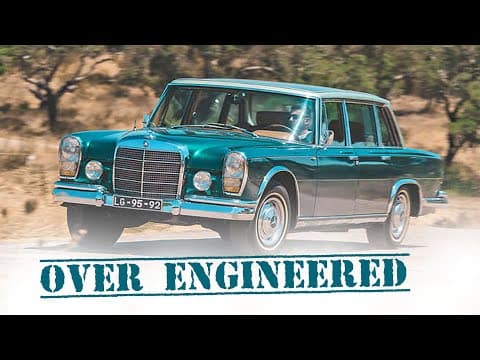
The Mercedes-Benz 600 was the car of choice for dictators and rock stars alike. This mechanical marvel boasted air suspension, twin heating systems, vacuum-operated windows and locks, and Bosch fuel injection at a time when carburetors were still the norm. While it was the ultimate status symbol, it has become a headache for restorers due to the rarity and expense of its parts.
Moving to the racetrack, the BRM H16 was not just complicated; it was mind-bending. It featured two flat-eight engines stacked on top of each other, each with its own crankshaft, geared together in a configuration known as the H16. Although it won a single Grand Prix, it was ultimately abandoned due to its heavy weight, unreliability, and the difficulty of maintenance.
The Citroen SM was a product of Citroen's acquisition of Maserati in 1968. This car combined a French body with an Italian heart, powered by a 2.7 L V6 that drove everything from the wheels to the brakes and even the hydropneumatic suspension. While it was advanced for its time, its reliability issues overshadowed its futuristic design, making it more fragile than functional.
Another bold experiment from Citroen was the Birotor, which featured a twin-rotor engine developed with NSU. This car was fast and smooth but was produced in limited numbers—only 847 units—before Peugeot shut it down, fearing it would tarnish the Citroen name. Most of the cars were bought back and scrapped, leaving only a few survivors as relics of an automotive dream that never fully materialized.
The Aston Martin Lagonda looked like a spaceship and was equipped with touch-sensitive controls and digital displays. However, the cutting-edge technology quickly became a maintenance nightmare, with repairs being both expensive and complicated. Despite its futuristic appeal, only 645 units were sold, marking it as a tech dream that turned into a cautionary tale.
Buick's Riata was an attempt to create a stylish, hand-built halo car featuring a digital dashboard and touchscreen computer in the late 1980s. Unfortunately, it was produced in a boutique factory that struggled to match the efficiency of larger manufacturers. With only 21,751 units sold over four years, the Riata's legacy is one of promise overshadowed by production challenges.
The Mitsubishi 3000GT was more than just a car; it was a science project. It featured all-wheel drive, active aerodynamics, four-wheel steering, electronically controlled suspension, and a twin-turbo V6 engine with nearly 300 horsepower. While it performed well, its complexity made it heavy and expensive, leading to a mixed reception. Today, it is celebrated as a cult favorite among modern classic enthusiasts.
Finally, we arrive at the Subaru SVX, one of the brand's most unusual creations. Designed to compete with the likes of the Toyota Supra and Nissan 300ZX, it featured a 3.3 L flat-six engine and all-wheel drive, along with a unique design that included windows within windows. However, its high price and quirky styling led to its commercial failure, and Subaru eventually shifted focus to rallying success with the Impreza.
These ten cars were not just modes of transportation; they were statements of engineering ambition. Some succeeded brilliantly, while others became cautionary tales. Regardless of their outcomes, each vehicle dared to be different, leaving an unforgettable mark on automotive history. Which of these over-engineered marvels amazed you the most?