This blog post explores the safety and effectiveness of Liqui Moly Proline Engine Flush, examining its impact on engine performance and potential risks, while sharing personal experiences and expert insights.
In the world of automotive maintenance, engine flushes are often a topic of debate. Today, we delve into the specifics of Liqui Moly Proline Engine Flush to determine whether it is a safe and effective product or a potential risk to your engine.
Engine flushes are designed to clean the internal components of an engine by removing sludge and buildup that can accumulate over time. With modern vehicles often having extended oil change intervals—some reaching up to 25,000 miles or one year—maintaining engine cleanliness is crucial. However, the question remains: is using an engine flush like Liqui Moly Proline beneficial or harmful?
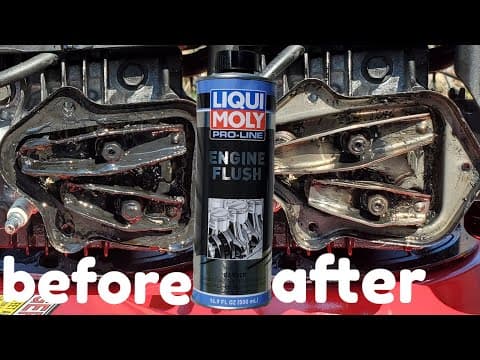
To investigate this, we created a controlled scenario that simulates extreme buildup within an engine. We intentionally painted the oil and subjected it to high temperatures to create the worst possible conditions for an engine flush. The goal was to observe the effects of Liqui Moly on this heavily contaminated engine.
According to Liqui Moly's instructions, the recommended dosage is to replace about 10% of your motor oil with their engine flush. For a typical 5-quart oil system, this amounts to approximately 16.9 ounces. In our experiment, we used 2.4 ounces for a smaller engine, which is about 15% of the total oil capacity.
Liqui Moly suggests idling the engine for 10 minutes after application. However, we opted for a more rigorous test by placing the engine under heavy load conditions. This approach was not recommended for home mechanics, as it could potentially lead to engine damage, but it was necessary for our investigation.
After running the engine under high stress, we monitored the temperature and compression:
Interestingly, the compression remained unchanged at 91 psi, indicating that the engine flush did not adversely affect the engine's compression levels.
Despite the extreme conditions we created, Liqui Moly Proline Engine Flush did not appear to cause any damage to the engine. The compression levels remained stable, and while the temperature increased, it did not reach a critical level. This suggests that, at least in this controlled scenario, the product performed as intended without detrimental effects.
Throughout the video, we encouraged viewers to share their experiences with engine flushes. Many have reported positive outcomes from using various engine flush products, including Liqui Moly. However, it is essential to consider that individual experiences may vary based on engine condition and maintenance history.
In conclusion, while Liqui Moly Proline Engine Flush has faced skepticism regarding its safety, our experiment indicates that it can be used without immediate risk to engine performance, provided it is applied correctly. Regular oil changes remain the best preventative maintenance strategy, but for those dealing with significant buildup, an engine flush may be a viable option. As always, it is crucial to weigh the potential benefits against the risks and to consult with automotive professionals when in doubt.
We invite you to share your thoughts and experiences with engine flushes in the comments below, contributing to a broader understanding of this topic within the automotive community.