This blog post delves into the tumultuous journey of restoring Taylor's E28, highlighting the challenges faced, miscommunications, and the eventual fallout between Taylor and the mechanic involved. It provides a detailed account of the restoration process, the financial implications, and the impact of public discussions on personal reputations.
In the world of car restoration, stories often unfold that reveal not just the technical challenges but also the interpersonal dynamics between car owners and mechanics. This blog post recounts the journey of Taylor's E28, a classic car that became the center of a complicated restoration saga involving miscommunication, financial disputes, and public scrutiny.
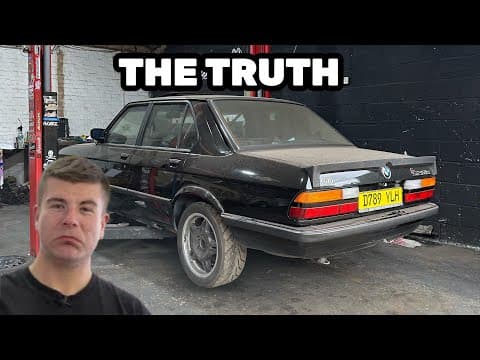
At the start of the year, Taylor dropped off his E28 at a non-reputable garage, where the mechanic, Jamie, was tasked with the restoration. Initially, Taylor had approached Jamie with a proposal for a YouTube collaboration, suggesting that Jamie could perform some welding work on the car in exchange for content creation. The understanding was that the car had only minor rust issues, which would be manageable within a day.
Upon inspection, it became clear that the E28 was in far worse condition than initially described. What was supposed to be a simple repair turned into a full restoration project, revealing extensive rust that required significant time and resources to address. Jamie, while recognizing the opportunity for content and business, communicated the need for a more substantial commitment than originally anticipated.
As the restoration progressed, financial discussions became a point of contention. Taylor had already invested £5,000 in the car, which was initially purchased with a blown engine. Jamie estimated that a proper restoration would cost between £5,000 and £8,000, a figure that Taylor found daunting. Despite this, Jamie offered to complete the work at a heavily discounted rate, acknowledging the collaborative nature of their agreement.
However, as the work continued, Taylor's financial situation became strained. He expressed difficulty in affording the restoration costs, leading to a breakdown in communication. Jamie had already invested significant time and effort into the project, completing around 50 hours of work, yet Taylor was unable to settle the bill.
The situation escalated when Taylor publicly discussed the restoration on a podcast, implying that the project had gone awry and that Jamie's work was subpar. This public airing of grievances prompted Jamie to respond, clarifying the extensive work that had been completed and the challenges faced throughout the process. Jamie felt that Taylor's comments were misleading and damaging to his reputation.
The fallout from the podcast discussion highlighted the power of social media and public opinion in shaping narratives. Jamie felt compelled to defend his work and reputation, emphasizing that he had been transparent and accommodating throughout the restoration process. He pointed out that the extensive work done on the E28 was documented and available for public viewing, countering Taylor's claims.
The saga of Taylor's E28 serves as a cautionary tale about the complexities of car restoration, particularly when financial agreements and public perceptions are involved. It underscores the importance of clear communication and mutual respect between car owners and mechanics. As the story continues to unfold, it remains a reminder of the potential pitfalls in the world of automotive restoration and the impact of social media on personal and professional relationships.