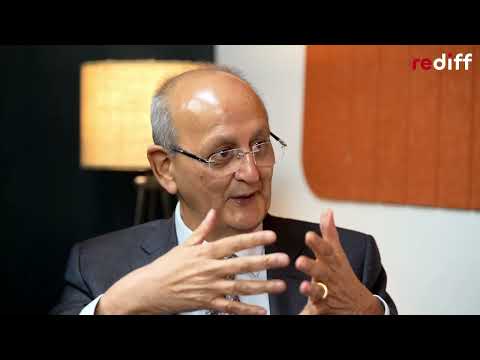
Andrew Holland, a seasoned investor with deep experience in Asian markets, discusses the current global market volatility, the impact of oil price risks, and the evolving investment landscape in India. He highlights the emergence of specialized investment funds (SIFs) as a new asset class, the importance of asset allocation, and the long-term growth potential of India despite short-term challenges.
Andrew Holland, a veteran investor who transitioned from London's financial world to Mumbai in 1997, has built a reputation for anticipating market trends ahead of the crowd. Currently pioneering a new investment category at Nippon Asset Management, Holland shares his journey, market perspectives, and advice for investors navigating today's volatile environment.
Holland's move to Asia began in 1992 when he recognized the continent's potential as a future economic powerhouse. Initially heading research and equities in South Korea with Barclays, he first visited India in 1993. The vibrant IPO activity and dynamic market environment in Mumbai and Delhi convinced him of India's promise.
In 1997, after an approach from Merrill Lynch to help build their equities business in India, Holland relocated to Mumbai. He found the transition smooth, aided by his familiarity with Indian cuisine and culture from his upbringing in the UK.
Upon arrival, Holland encountered a market still transitioning from traditional practices like cash and carry trading and physical transfer certificates to digital systems. Research was nascent, primarily focused on investment banking rather than comprehensive equity analysis. Holland and his team pioneered the practice of issuing both buy and sell notes on companies, a novel approach at the time.
Discussing the current global setup, Holland emphasizes the unpredictability influenced by geopolitical events, particularly actions by global leaders and conflicts in the Middle East. He notes that markets have so far priced in the expectation that conflicts will be short-lived, with no wholesale selling observed globally.
Regarding Indian markets, Holland acknowledges the impact of higher oil prices and currency pressures but points out that foreign investors have been selling for reasons beyond recent geopolitical tensions, including a shift in focus towards AI-driven markets like South Korea, Taiwan, and China.
Holland explains that foreign institutional investors (FIIs) are reallocating funds to markets with stronger AI plays, which India currently lacks. This shift, combined with currency depreciation and balance of payments concerns, has led to FII selling in India despite the country's compelling long-term story.
The Indian market has already corrected significantly, with valuations now more reasonable. Holland suggests that even if earnings growth disappoints slightly, the market has largely priced in these risks. He anticipates earnings growth in the range of 8-10% compared to earlier expectations of 10-12%, with market returns likely reflecting this adjustment.
Holland advocates for systematic investment plans (SIPs) as a disciplined approach to investing, allowing investors to buy across market cycles without timing the market. He stresses the importance of asset allocation, balancing equities, debt, gold, silver, and emerging assets like Bitcoin based on individual risk profiles and market conditions.
Holland personally invests in SIPs, silver, and cryptocurrencies like Bitcoin, Ethereum, and XRP, viewing these as part of a diversified portfolio and a legacy for younger generations.
Holland is at the forefront of managing Specialized Investment Funds (SIFs), a new mutual fund category introduced by SEBI that allows hedging and short-selling strategies previously unavailable in mutual funds. With a ticket size of 10 lakhs, SIFs offer a more accessible alternative to Portfolio Management Services (PMS) and Alternative Investment Funds (AIFs).
Holland explains that SIFs can be structured with long bias, long-short, or absolute return strategies, providing flexibility to manage risk and capitalize on market trends.
Looking ahead 12 to 18 months, Holland believes the market's direction hinges on geopolitical developments in the coming weeks. If positive news emerges, he expects market returns of 8-10% with potential for higher gains if earnings momentum continues.
For those hesitant to enter the market amid volatility, Holland recommends continuing SIPs and considering incremental investments. He emphasizes that missing initial market gains is less critical than maintaining a long-term investment horizon.
Holland shares his experiences adapting to Mumbai life, noting the ease of settling in compared to South Korea. He appreciates the evolving restaurant scene and the blend of Indian and Western cuisines at home. Despite challenges like traffic and monsoons, he enjoys the city's vibrancy.
Holland remains bullish on India's long-term growth, allocating 80% of his investments to India, with the remainder spread across Europe, the US, and alternative assets like Bitcoin and precious metals. He underscores the importance of investor education, especially regarding sophisticated products like SIFs, to ensure informed decision-making.
Andrew Holland's insights provide valuable guidance for investors navigating the complexities of today's markets, highlighting the need for diversification, patience, and embracing new investment opportunities to build wealth over time.