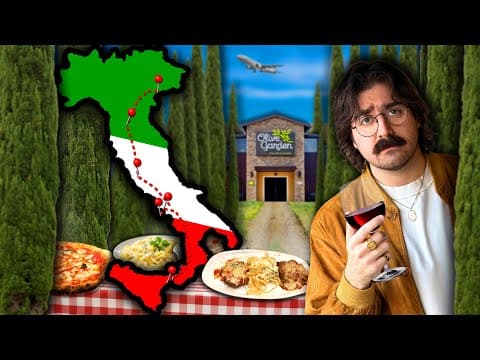
This blog post explores the cultural and culinary contrasts between Olive Garden, a popular American Italian restaurant chain, and authentic Italian cuisine experienced during a trip to Italy. The author shares personal anecdotes and observations, highlighting the differences in food, atmosphere, and cultural significance, ultimately concluding that while Olive Garden offers a unique dining experience, it cannot replicate the authenticity of Italian cuisine.
Italy is a nation renowned for its natural beauty, rich history, and, of course, its food. The relationship between Americans and Italian culture is complex, often reduced to a caricature of what Italian food truly represents. This exploration delves into the cultural divide between Olive Garden, a prominent American Italian restaurant chain, and the authentic culinary experiences found in Italy.
Olive Garden stands out in the American dining landscape, often seen as the go-to place for celebrations like birthdays and graduations. However, opinions about the restaurant vary widely. Some view it as a beloved staple, while others criticize it as a poor representation of Italian cuisine. Founded in 1982 by General Mills, Olive Garden was marketed as an authentic Italian dining experience, despite its origins as a corporate venture.
The story of Olive Garden is not one of a humble family restaurant but rather a corporate strategy to replicate the success of Red Lobster. With a marketing campaign that promised an authentic Italian experience, Olive Garden quickly became a household name. The restaurant's motto, "At Olive Garden, we don't know the meaning of the word 'can't'," encapsulates its approach to dining—unlimited breadsticks and a menu designed to appeal to American tastes.
To truly understand the differences between Olive Garden and authentic Italian cuisine, I embarked on a journey to Italy, visiting cities like Naples, Capri, Sicily, Rome, Florence, and Venice. This trip aimed to compare the Americanized version of Italian food with its roots in Italy.
Before heading to Italy, I visited an Olive Garden in the suburbs of Chicago. The decor felt less like an Italian villa and more like a generic American restaurant. The experience began with a tablet at the table for entertainment, and soon, the famous unlimited breadsticks arrived. While the breadsticks were warm and plentiful, the overall dining experience felt more about quantity than quality.
I ordered the "Tour of Italy," which included chicken parmesan, fettuccine Alfredo, and lasagna. While the portions were generous, the food was mediocre at best, and the prices were surprisingly high for a chain restaurant. This visit set the stage for my upcoming culinary adventure in Italy.
After a long journey, I arrived in Naples, my first stop in Italy. The vibrant streets and local shops were a stark contrast to the corporate feel of Olive Garden. Naples is famous for its pizza, and I was eager to try the authentic version. The pizza I tasted was thin, fresh, and bursting with flavor—an experience that far surpassed anything I had at Olive Garden.
My travels continued to Capri, where the stunning scenery and local cuisine further highlighted the differences between American and Italian dining. Despite the rain, the beauty of the island was captivating. I sampled local dishes, including a lemon sorbet that showcased the region's famous lemons.
In Sicily, I enjoyed a delicious crab gnocchi that was not only affordable but also far superior to the offerings at Olive Garden. The experience of dining in Italy was enriched by the atmosphere, the quality of the food, and the cultural significance behind each dish.
As I traveled through Italy, I began to understand the deep cultural roots of Italian cuisine. Each region has its specialties, and the pride Italians take in their food is palpable. From the bustling streets of Rome to the serene countryside of Tuscany, the authenticity of Italian food is tied to its history and the people who prepare it.
One of the highlights of my trip was a food tour in Rome, where I learned about the history of various dishes and the significance of regional ingredients. This experience underscored the idea that true Italian authenticity cannot be replicated outside of Italy. The stories behind the food added layers of meaning that a chain restaurant like Olive Garden simply cannot provide.
After my extensive journey through Italy, I returned to Olive Garden for one last meal. While the experience was enjoyable and the atmosphere lively, it was clear that Olive Garden is a mere shadow of the authentic Italian dining experience. The connections made over meals, whether at a chain restaurant or a local eatery, are what truly matter.
In the end, while Olive Garden offers a unique dining experience that many cherish, it cannot compete with the authenticity, quality, and cultural significance of Italian cuisine. The choice between corporate dining and authentic experiences is a reflection of our values and desires as consumers. Ultimately, it's about the connections we make over food, whether at a chain restaurant or a family-owned trattoria in Italy.