Explore the rich history of Medieval Christmas feasts centered around the boar's head, including a detailed recipe for Christmas Boar with black sauce, and learn about the significance of these traditions in festive celebrations.
Long before eggnog and turkey became staples of Christmas celebrations, the people of Medieval Europe honored the holiday with a grand feast featuring a boar's head. This tradition, rich in history and flavor, marked the festive season from December 25th to January 6th, a time when feasting was paramount for those who could afford it.
The boar's head was not just a dish; it was a centerpiece of the Christmas feast. The famous carol, "The Boar's Head in Hand I Bring," captures the essence of this tradition:
"This boar his head in hand I bring,
With garland gay in porttoring.
I pray you all with me to sing.
With hey! Lord, knights, and squires,
Parsons, priests and vicars,
The boar his head is in the first dish,
With hey!"
Typically, the boar's head would be hollowed out, stuffed with various meats, fruits, and spices, boiled, and then paraded into the banquet hall. The remaining boar meat was roasted and served alongside the head, ensuring that nothing went to waste.
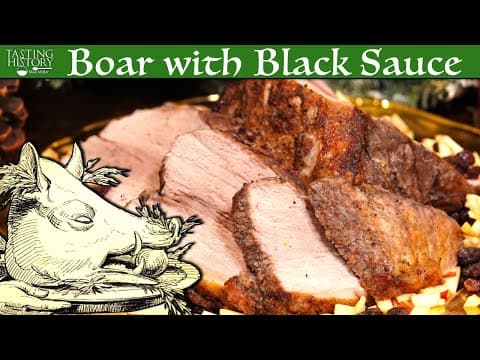
In this blog post, we will recreate a Medieval recipe for Christmas Boar using boar shoulder, inspired by the 16th-century German cookbook, "Das Kochbuch der Sabina Welserin." This recipe not only highlights the flavors of the time but also showcases the culinary techniques that were innovative for their era.
To prepare the boar, gather the following ingredients:
The black sauce is a unique aspect of this dish, differing from many Medieval recipes that typically used breadcrumbs for thickening. Instead, this sauce employs a roux, a technique that was quite advanced for its time.
The boar's head was more than just a dish; it symbolized abundance and celebration. The tradition of bringing in the boar's head was often accompanied by songs and merriment, setting the tone for the feast that followed. The boar's head carol, one of the earliest written versions dating back to 1521, illustrates the pride and joy associated with this dish:
"The comes in the second course with much pride,
The cranes, the herons, the bitterns, by their side,
To partridges and the plovers, the woodcocks, and the snipe,
With hey! Larks in hot show ladies for to pick..."
This festive spirit was complemented by copious amounts of wine, with a Medieval unit of measurement known as a "butt" equating to about 573 liters, emphasizing the importance of wine in these celebrations.
The tradition of the boar's head and the elaborate feasts of Medieval Europe remind us of the rich culinary heritage that has shaped modern holiday celebrations. By recreating these historical recipes, we not only honor the past but also bring a taste of history to our own festive gatherings. Whether you choose to serve a boar's head or a simpler version, the spirit of feasting and celebration remains timeless.