The Thoughtful Money spring conference featured insights from top economists and analysts who discussed the global economic impact of the recent oil price shock, geopolitical tensions in the Middle East, tightening credit markets, and the outlook for financial assets including stocks, housing, precious metals, and digital currencies. Experts warn of a potential stagflationary recession, liquidity squeeze, and a major bear market, while also highlighting emerging investment opportunities and the
The Thoughtful Money spring online conference recently brought together a distinguished panel of economists, analysts, and financial experts to discuss the current and future state of the global economy. Over an intensive 11-hour session, these experts shared their insights on the economic impact of the recent oil price shock, geopolitical tensions, credit market conditions, and the outlook for various asset classes.
Lacy Hunt, former senior economist to the Federal Reserve, opened the conference by explaining the profound effects of the recent oil price shock. He emphasized that oil price shocks are global events affecting every major economy due to oil's critical role in production and its price inelastic demand. When oil supplies are withdrawn and prices rise, economies face major recalculations that typically result in higher prices and lower GDP.
Hunt highlighted that the initial economic conditions matter greatly; vulnerable or teetering economies are especially hard hit by such shocks. The net effect is an inward shift of the supply curve, leading to inflationary pressures and economic contraction.
Luke Gman expressed deep concern about a pronounced stagflationary recession ahead, exacerbated by the ongoing war in Iran. He warned that the crisis could be worse than the combined impact of the COVID-19 pandemic and the 2008 financial crisis. Gman noted a significant gap between market perception and economic reality, reminiscent of the 2007-2008 financial crisis when markets were at all-time highs despite underlying distress.
Echoing these concerns, Ed Dowd pointed out that the high oil prices are already causing a liquidity squeeze across essential supply chains. He forecasted a strengthening US dollar by the end of the year, indicative of a dollar shortage and rising credit defaults.
Michael Hal discussed the ongoing deterioration of global liquidity, which is closely correlated with lower asset prices. He described the current environment as part of a five to six-year debt refinancing cycle, where liquidity conditions are tightening primarily due to private sector dynamics rather than central bank actions. Money is moving from financial markets into the real economy, partly to compensate for inflation and higher oil prices, leading to tightening liquidity and pressure on asset markets.
Housing analyst Melody Wright highlighted that credit is tightening across the housing market, not due to smarter lending but because lenders are running out of liquidity. Mortgage refinance rejection rates have reached record highs, and private credit markets are also constraining lending. This tightening is expected to impact both residential and commercial real estate, especially with a looming debt maturity wall in 2026 for commercial properties.
Technical analyst Michael Oliver warned that the stock market is on the brink of a major multi-year bear market. He described the current market as the biggest bubble in history, surpassing the peaks of 1929, 1973, 2000, and 2007. Momentum indicators suggest a significant downturn is imminent, with potential declines of at least 50%.
Stephanie Pomboy and Grant Williams discussed the macroeconomic outlook, focusing on the risk of cascading asset price write-downs and debt defaults if geopolitical tensions and private credit issues worsen. They expressed concern about the surge in oil prices driving interest rates higher and triggering risk-off sentiment in markets.
Brent Johnson presented a compelling case for stable coins as a gamechanger in the global monetary regime. He compared their potential impact to the US dollar's decoupling from gold decades ago. Stable coins facilitate easier holding and transfer of US dollars internationally, especially in regions with unstable local currencies. Recent increases in stable coin usage in the Middle East underscore their growing importance.
Darius Dale offered a more optimistic view, noting that geopolitical events alone have historically had limited long-term impact on market trends. He emphasized that key macro cycles—growth, inflation, monetary and fiscal policy, liquidity, and positioning—are more critical in determining market momentum. However, he acknowledged that persistent conflict could lead to a trending decline in global liquidity.
Independent journalist Matt Taibi discussed the challenges facing today's media, highlighting widespread confusion about facts and trustworthiness of sources. He traced these issues to broader systemic problems in how information is disseminated and consumed.
Judy Shelton and Danielle D. Martino Booth shared their views on the Federal Reserve's transition and the new chair, Kevin Worsh. Shelton expressed frustration with the Fed's stewardship of the US currency, criticizing the deliberate debasement of the money supply and its constitutional implications.
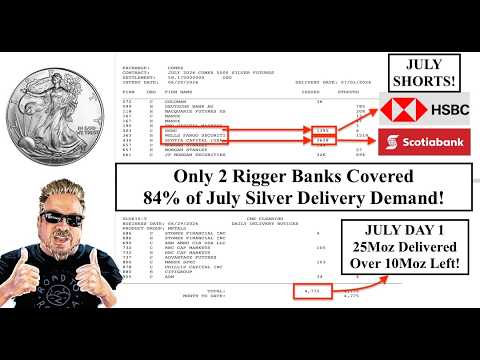
Precious metals analyst Andy Sheckchman argued that gold and silver are currently oversold and primed for a recovery to new all-time highs. He cited record import volumes of silver into China and significant deliveries on COMEX as indicators of strong demand and accumulation.
Rick Roll highlighted how geopolitical tensions are exposing supply chain fragilities and driving appreciation for natural resources and their controllers. Investor David Haye identified intriguing opportunities created by Middle East turmoil, AI developments, and private credit market disruptions. He advised maintaining a high level of cash for safety while being alert to emerging investment prospects.
Lyn Alden provided an update on digital assets, noting that Bitcoin and stable coins have experienced a shallower correction compared to previous cycles. She suggested that volatility is likely to decrease as the market matures and institutional involvement grows, making it harder for single entities to manipulate prices.
The conference concluded with an extensive Q&A session featuring Thoughtful Money's team of financial advisers. Attendees praised the event for its insightful presentations and valuable discussions.
For those who missed the live event, replay videos of all presentations and Q&A sessions are available for purchase. The organizers also announced early bird pricing for the upcoming fall conference, offering attendees a chance to lock in tickets at current rates despite inflation.
Looking ahead, Thoughtful Money plans to release interviews on topics such as tax-free retirement planning, US-Cuba relations, and lessons from investment legends like Buffett, Lynch, and Templeton.
This comprehensive conference provided a wealth of actionable insights into the complex economic landscape shaped by geopolitical tensions, market dynamics, and evolving monetary systems. Investors and observers alike will benefit from the expert analyses and forward-looking perspectives shared during this event.