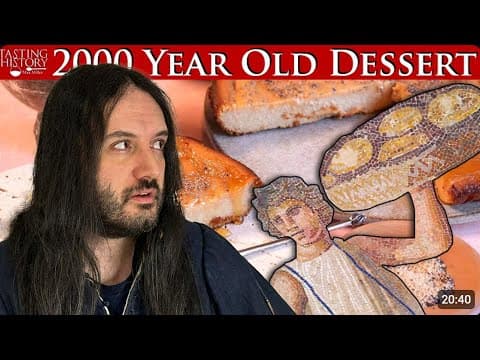
In this blog post, we delve into the ancient Roman cheesecake known as Savilum, as explored by Max Miller on his channel Tasting History. We discuss its historical context, ingredients, and preparation methods, comparing it to modern cheesecakes while appreciating its unique flavors and cultural significance.
Hello number ones! Welcome back to my channel. Today, we are diving into the fascinating world of ancient Roman cuisine, specifically focusing on a delightful dessert: the ancient Roman cheesecake known as Savilum. This exploration is inspired by Max Miller's engaging video on his channel, Tasting History, where he brings historical recipes to life.
Cheesecake is a beloved dessert across various cultures, with styles ranging from the creamy New York cheesecake to the burnt Basque cheesecake and the unique Japanese soule style cheesecake. But how does the ancient Roman cheesecake compare to these modern variations?
The Savilum, a cheesecake that dates back over 2,000 years, offers a glimpse into the culinary practices of ancient Rome. This dessert is not only a treat but also a connection to our past, showcasing how certain recipes have endured through the ages.
The recipe for Savilum comes from De Agricultura, a work by Marcus Porcius Cato, commonly known as Cato the Elder. Cato was a serious figure in Roman history, known for his no-nonsense approach to farming and agriculture. Interestingly, he dedicated an entire section of his work to cakes, emphasizing their importance in maintaining morale among workers.
Cato presents three cheesecake recipes, which can be likened to the tale of Goldilocks and the Three Bears: one is too simple, one is overly complex, and the third, Savilum, is just right. The simplest version, known as liboom, consists merely of cheese and flour, while the more complex version, called placenta, involves multiple layers and is quite labor-intensive.
To prepare Savilum, you will need the following ingredients:
Savilum was not just a dessert; it played a role in ancient Roman society. Unlike the other cheesecakes that could be served whole, Savilum was meant to be served directly from the dish it was baked in, suggesting a communal aspect to its consumption. This practice reflects the Mediterranean customs of sharing food and enjoying meals together.
The ingredients used in Savilum, such as cheese and honey, were staples in the ancient Mediterranean diet. Honey served as the primary sweetener, as sugar was not widely available. This reliance on natural sweeteners connects us to the culinary traditions of the past.
While modern cheesecakes often feature a variety of flavors and toppings, Savilum is a more straightforward dessert, focusing on the natural sweetness of honey and the richness of cheese. The texture is denser than contemporary cheesecakes, offering a unique experience that differs from the creamy varieties we enjoy today.
Max Miller's exploration of Savilum highlights the evolution of cheesecake over the centuries. From its ancient origins to the diverse interpretations we see today, cheesecake remains a beloved dessert that continues to delight palates around the world.
In conclusion, the ancient Roman cheesecake Savilum is a testament to the enduring nature of culinary traditions. By recreating this historical recipe, we not only savor a delicious dessert but also connect with the past, appreciating the simplicity and richness of ancient Roman cuisine. Whether you prefer modern cheesecakes or are intrigued by historical recipes, Savilum offers a unique taste of history that is worth exploring.
So, the next time you indulge in cheesecake, consider the journey it has taken through time, from ancient Rome to your table today. Happy baking!