This blog post delves into the fascinating world of mad honey harvested in Nepal, detailing the dangerous methods used by local honey hunters, the unique properties of the honey, and the cultural significance it holds. It also highlights the risks associated with its consumption and the historical context of its use.
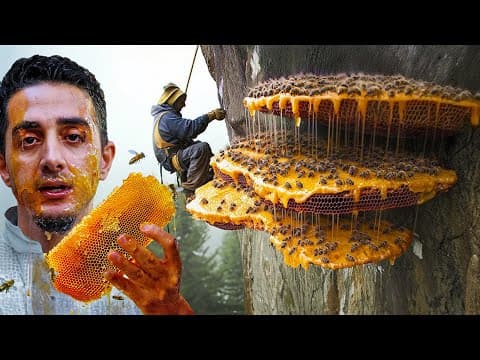
In the remote high cliffs of Nepal, a rare honey known as mad honey is harvested for just two weeks each year. This extraordinary honey, produced by the world's largest honey bees, contains potent grayanotoxins that can distort the senses and induce vivid hallucinations. The process of harvesting this honey is fraught with danger, as hunters must climb hundreds of meters up steep cliffs using only rope ladders, enduring painful stings from the giant bees along the way.
Mad honey has been used historically by locals in small doses as a remedy for various ailments and as an aphrodisiac. However, the line between its healing properties and toxicity is razor-thin. An extra spoonful can lead to severe side effects, including slowed heart rate, paralysis, or even death. The honey is harvested by a single family in a remote village, preserving ancient methods that have remained unchanged for centuries.
After a long journey involving 36 hours of flying and road tripping, we arrived at Tany Village, home to the Gurung tribe, who migrated from Tibet. As per local customs, newcomers must wear an amulet for protection against harm and evil spirits. Before heading out to hunt for honey, a local woman blessed me with water and tied a protective thread around my neck.
We met three generations of honey hunters: Budhiman, his father, and his grandfather. Each year, they venture to the towering cliffs to seek mad honey. The preparations for the hunt involved discussions about which cliff to target and the crafting of handmade tools, including a ladder made from bamboo and wooden rungs. The hunters also prepared a bundle of freshly cut leaves, which would serve as incense to ward off the bees.
Equipped with beekeeper masks, the hunters began their descent down an 80-meter ladder, which was not tall enough for the cliffs they were scaling. Nand, one of the hunters, started his climb from the top of the cliff, while I remained below to provide support. The mad honey is produced by Apis laboriosa, the largest honey bee species, known for its long stingers that can easily penetrate clothing.
As the hunters reached a ledge above the giant beehives, they rearranged the ladder for balance. Smoke was used to calm the bees, who sensed danger and began their defensive display. Nand skillfully juggled multiple tasks, using poles to balance a basket while cutting the honeycomb, all while being stung multiple times. The risk of falling was ever-present, as any misstep could be fatal.
Mad honey contains grayanotoxins derived from the nectar of rhododendron flowers, requiring bees to visit approximately four million flowers to produce just one kilogram of honey. This rare honey, which can sell for around $400 per kilogram, poses significant risks to those who consume it. A small amount can lead to nausea, vomiting, and even paralysis.
After a successful harvest, it was finally time to taste the mad honey. The flavor was slightly bitter with a hint of sweetness, and I could feel the effects almost immediately. The sensation was akin to eating something spicy, with a burning feeling in my mouth. However, I was cautious, aware of the potential for severe side effects.
Mad honey has a historical context as a biological weapon, used by soldiers in 67 BC to intoxicate Roman invaders. While some locals use it for meditative purposes, the effects can vary widely. After consuming a generous amount, I began to feel the effects intensifying, leading to nausea and a drop in body temperature. My experience mirrored that of Meu, who had consumed less and was feeling quite ill.
The effects of grayanotoxin can be severe, with no known antidote. Fortunately, my body cleared the poison within 24 hours, and I felt better the next day despite a night filled with discomfort. The experience highlighted the cultural significance of mad honey and the bravery of the Gurung honey hunters who risk their lives to harvest it.
Mad honey is not only a unique product of Nepal's natural environment but also a testament to the rich cultural heritage of the Gurung people. As they continue to practice their ancient methods of honey hunting, it is essential to recognize the risks involved and the importance of preserving this tradition for future generations. The journey into the world of mad honey was both exhilarating and enlightening, showcasing the delicate balance between nature, culture, and the human experience.